

.webp)



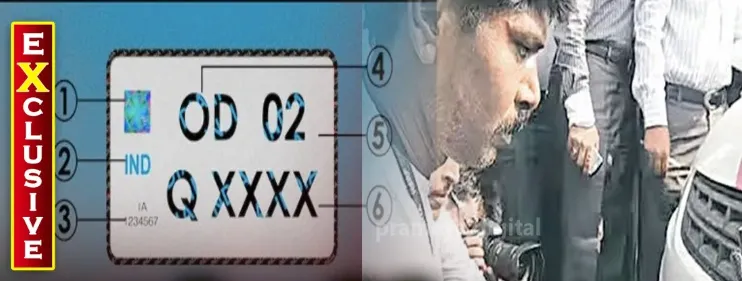
Bhubaneswar, Nov 23: Seven years after the introduction of the High-Security Registration Plate (HSRP) system, questions are being raised over its effectiveness in curbing vehicle theft and crime in Odisha. Despite making HSRP mandatory for older vehicles and putting vehicle owners through considerable difficulties, the system appears to have failed to achieve one of its key objectives — preventing vehicle theft.
Introduced to strengthen vehicle security and prevent vehicle-related crimes, HSRP was made mandatory by the Union Ministry of Road Transport and Highways for vehicles purchased before April 1, 2019. The system was aimed at preventing number plate tampering, curbing the sale of stolen vehicles and linking vehicle details across the country through the VAHAN portal.
Earlier, ordinary number plates could easily be replaced or duplicated, allowing criminals to use fake registration numbers while committing offences. This often made it difficult for police to identify stolen vehicles and track offenders.
Also Read: Bhubaneswar police launch night blocking drive; over 70 vehicles seized
However, police records cited in the report indicate that vehicle theft, particularly two-wheeler theft, has increased despite the introduction of HSRP.
According to the figures, 6,780 vehicle theft cases were reported across Odisha during 2018-19. Following the introduction of HSRP, 8,231 vehicle theft cases were recorded between April 1, 2019 and March 30, 2020. Two-wheelers accounted for the largest share of the stolen vehicles.
During the COVID-19 pandemic, two-wheeler theft cases reportedly declined by 31 per cent. However, vehicle thefts have increased by 10 to 15 per cent annually since 2023, according to the report.
How HSRP was supposed to improve vehicle security
HSRP comes with several security features designed to prevent duplication and tampering. It carries a blue 'IND' chromium-based hologram that is difficult to replicate. Each plate also has a unique 10-digit laser identification number linked to the vehicle's engine and chassis numbers.
The plates are fitted using non-reusable snap locks, making it difficult to remove or replace them without damaging the locking mechanism.
The reflective sheet on the plates also enables CCTV systems and Automatic Number Plate Recognition (ANPR) cameras to read registration numbers more easily, even at night.
The system was expected to help police identify vehicle owners through the unique laser code in cases of theft or criminal activity. However, questions remain over how effectively these features are being used to track stolen vehicles.
Interestingly, while the system's impact on preventing vehicle theft remains under scrutiny, traffic cameras can automatically read HSRP numbers and issue e-challans for traffic violations. Online traffic fines have increased with the use of automated number plate recognition.
Vehicle owners faced long delays & technical problems
The implementation of HSRP also caused considerable inconvenience to vehicle owners across Odisha.
The situation became particularly difficult in 2022-23 when the government announced deadlines for installing the plates. As lakhs of vehicle owners attempted to book slots simultaneously, the OSRTC and SIAM portals reportedly faced repeated server crashes.
Even after completing online bookings, many vehicle owners had to wait two to three months to get installation appointments.
The shortage of authorised HSRP dealers in several urban and rural areas further added to their problems. Long queues of vehicles were seen outside dealer points, with people often waiting for hours to get their number plates installed.
Residents of remote villages had to travel 50 to 60 kilometres to reach installation centres. Many also depended on cyber cafes and intermediaries to complete the online booking process due to a lack of familiarity with the digital procedure.
In several cases, vehicle owners reportedly paid two to three times the prescribed fee to get their plates installed on time, fearing penalties for missing the deadline.
Questions over the effectiveness of HSRP
The primary objective behind introducing HSRP was to prevent vehicle theft, stop number plate duplication and make it easier for law enforcement agencies to track vehicles involved in criminal activities.
However, the reported rise in vehicle theft has raised questions about whether the system has delivered the expected results.
While HSRP has made vehicle identification through cameras and automated traffic enforcement easier, its effectiveness in preventing theft and assisting police investigations remains a matter of concern.
.webp)