

.webp)

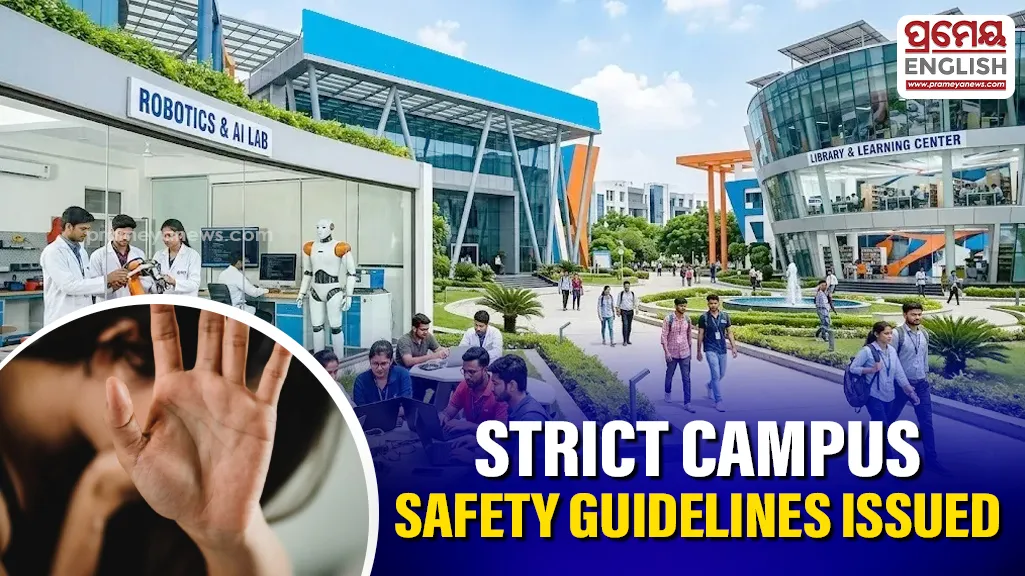
Bhubaneswar, April 23: Amid rising allegations of sexual harassment, misconduct, and inappropriate behavior on campuses, the Higher Education Department has issued a set of stringent guidelines to ensure the safety of female students and women employees across colleges and universities.
Expressing concern over repeated incidents, the department has made it clear that all campuses must be transformed into safe spaces. As per the new directives, traditional wooden classroom doors will be replaced with transparent glass doors and windows. Institutions have also been instructed to keep classroom doors and windows open during teaching hours.
The installation of CCTV cameras across campuses has been made mandatory, along with proper illumination of dark and vulnerable areas. Clean and secure toilets for women must be ensured in every institution. The department has also made it compulsory to constitute Internal Complaints Committees (ICCs) in line with the POSH Act, 2013. Non-compliance with these norms may invite strict action, including cancellation of institutional recognition.
In a letter issued to all higher educational institutions, the department has highlighted five key focus areas, with priority on the formation and proper functioning of ICCs. Regional Directorates of Education have been directed to ensure 100% compliance with POSH provisions. Institutions without ICCs will be barred from the admission process, which will be conducted exclusively through the SAMS portal. Annual ICC reports must be submitted to both Local Complaints Committees (LCCs) and regional authorities.
Further, institutions have been instructed to strengthen campus security by ensuring adequate lighting at entry and exit points, parking areas, hostels, and other sensitive zones. Dark corners, narrow passages, and unused spaces must be identified and eliminated. Visitor entry will be strictly monitored and recorded, while security personnel will carry out regular patrolling.
CCTV cameras will be installed in corridors, staircases, and other critical areas following safety norms. Information related to ICCs will be prominently displayed through signage and digital boards. The department has also mandated periodic campus safety audits and awareness programmes on gender sensitisation and security.
The move is seen as a significant step towards enhancing safety standards for women across higher educational institutions in the state.
.webp)