

.webp)


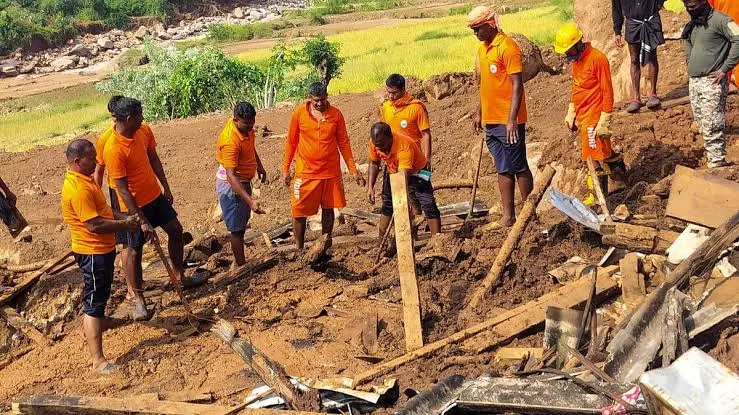
Berhampur, Nov 1: Ganjam district witnessed widespread flooding following Cyclone Arnab, with more than half of the district reportedly inundated. Several low-lying areas and newly developed residential localities in Berhampur were submerged, triggering questions over dam management, flood preparedness and urban drainage infrastructure.
Allegations have surfaced that delayed water release from reservoirs and the simultaneous opening of dam gates after heavy rainfall worsened the flood situation. Critics have also questioned the authorities for allegedly failing to act on advance warnings issued by the India Meteorological Department (IMD).
The IMD had issued an orange alert for Ganjam on October 27 and a red alert on October 28. However, reservoirs, including Bhanjanagar, Sorada, Daha and Baghua, were reportedly holding nearly 80 per cent of their capacity. Concerns have also emerged over the timing of water discharge from these reservoirs when several rivers were already flowing close to danger levels.
Associate Professor Sandeep Pattnaik of IIT Bhubaneswar said the floods could not be attributed to rainfall alone. He identified water management, dam operations, inadequate drainage and solid waste management as contributing factors.
Opposition parties, including the Congress and Left parties, have blamed the Water Resources Department for alleged mismanagement. BJD MLA and Opposition Chief Whip Pramila Mallik alleged that reservoir water was not released in time and was discharged after heavy rainfall, worsening the situation.
However, Chief Engineer of the Water Resources Department, Dilip Kumar Rout, maintained that reservoir levels had already been reduced to 60 per cent of their capacity ahead of the cyclone. He said the rainfall was exceptionally heavy, with the Rushikulya River crossing its danger mark of 17 metres and reaching 19.2 metres.
Patrapur recorded 546 mm of rainfall in 24 hours, marking one of Odisha's highest rainfall events in recent decades. The incident has renewed debate over disaster preparedness, dam management and urban flood-control infrastructure.
.webp)