

.webp)

National Fuel Rates Rise Again
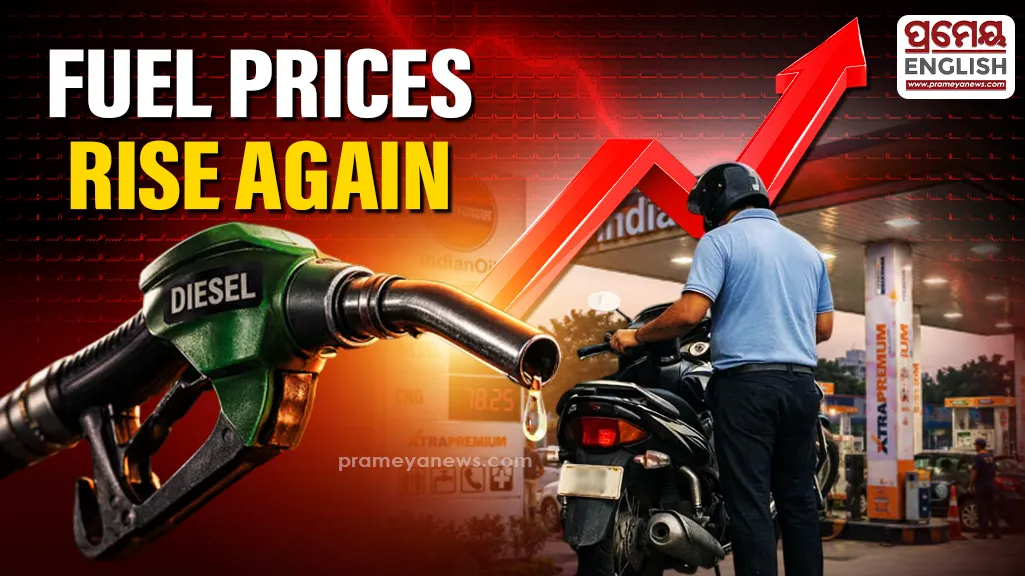
Domestic oil marketing companies raised the retail prices of petrol by 87 paise per litre and diesel by 91 paise per litre on Tuesday. This adjustment marks the second upward revision in automotive fuel rates within a single week, intensifying financial pressure on transport operators and daily commuters nationwide. Following the fresh revision, petrol in Delhi climbed to ₹98.64 per litre, while diesel reached ₹91.58 per litre.
Historically, retail fuel prices in Odisha and other coastal states reflect deep vulnerabilities to international crude market volatility and central freight levies, meaning local pump prices often exceed metropolitan baselines due to domestic state taxes.
Impact on Consumer Wallets
Public sector energy enterprises state that structural adjustments became necessary due to global crude oil pressure. The sudden upward trajectory follows a substantial three-rupee increase implemented last Friday, compounding fears of rising commodity logistics costs. Retailers argue that keeping prices frozen during global supply constraints creates unsustainable deficits for state-run distributors.
Industry analysts project that this consecutive increase will filter into essential commodities, driving up food logistics costs. Households must brace for secondary inflationary pressures as transport networks adjust their freight tariff structures to accommodate these expensive operating realities.
.webp)