


May 16 marks sixty-six years since laser discovery
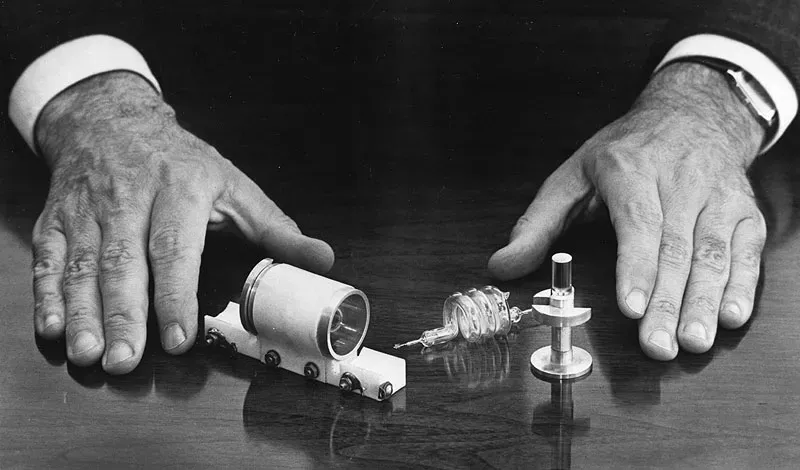
Physicist and engineer Theodore Maiman successfully achieved the first operational laser emission on May 16, 1960, changing the trajectory of modern science. Working out of the Hughes Research Laboratories in Malibu, California, Maiman ended a decade-long lull in optical research by creating a functional optical resonator. His device utilized a synthetic ruby crystal rod wrapped in a photographic flashbulb to generate a highly intense, coherent beam of light. This actualisation brought Albert Einstein’s 1916 theoretical concepts regarding stimulated emission into physical reality, effectively reviving the stagnant field of optics. Today, institutions across India, including the Indian Institute of Technology Bhubaneswar, actively advance laser applications in semiconductor research, honoring this foundational legacy.

Theodore Maiman - (1927-2007)
From Corporate Deadlines to Global Rejection
Corporate leaders at the research firm gave Maiman a strict nine-month window and a 50,000-dollar budget to realise the project. Despite meeting the tight deadline, mainstream scientific gatekeepers initially doubted the breakthrough. Editors at the prominent American journal Physical Review rejected his manuscript, claiming their publishing queue was oversaturated with microwave-based maser papers. Maiman subsequently sent a concise, 300-word report to the British journal Nature, where it was published in August 1960. Nobel laureate Charles Townes later described this brief text as the most impactful publication per word in the history of the journal.
Shaping Contemporary Life
Commercial models entered global markets by 1961, quickly transitioning the device from a laboratory novelty into an essential industrial tool. Contemporary data networks rely heavily on fiber-optic systems to transmit global web traffic instantly. Everyday consumer items like barcode readers, laser printers, and optical disc players stem directly from this 1960 breakthrough. Medical professionals utilize these precise beams for advanced vision correction surgeries, dermatological treatments, and targeted tumor therapies, cementing the invention as a cornerstone of modern human existence.