
.webp)


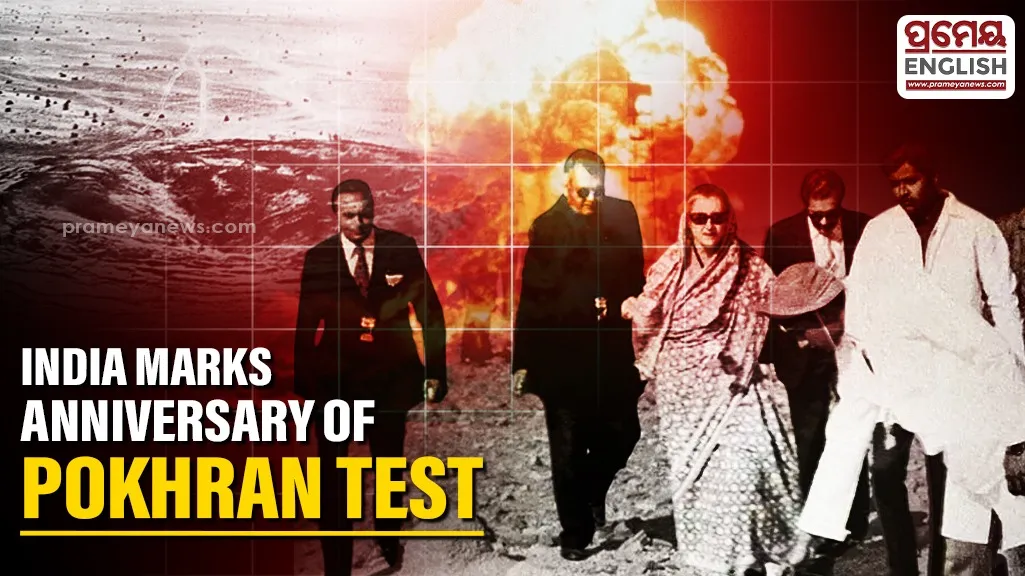
Fifty-two years ago, India achieved nuclear capability at Pokhran
India entered the global nuclear arena exactly fifty-two years ago today by detonating its first atomic device in the deserts of Rajasthan. Code-named Operation Smiling Buddha, the successful underground explosion occurred on May 18, 1974, at the Pokhran test range. This event established India as the sixth nation in the world to possess nuclear capabilities, breaking the monopoly held exclusively by the five permanent members of the United Nations Security Council.
Preparations for this historic breakthrough began secretly on September 7, 1972, when Prime Minister Indira Gandhi formally authorised local scientists to manufacture an indigenous nuclear device. Raja Ramanna, serving as the director of the Bhabha Atomic Research Centre, directed the highly classified operation. Scientists chose the test date to coincide with Buddha Purnima, which directly inspired the mission code name. Upon successful detonation, Ramanna famously sent a coded message to Prime Minister Gandhi stating, "The Buddha has smiled."
Western intelligence networks failed to detect the preparations, catching global superpowers entirely by surprise. The device yielded an explosive force estimated between 8 and 12 kilotons of TNT. International backlash followed swiftly, as developed countries, including the United States, slapped strict economic and technological sanctions on New Delhi to curb nuclear proliferation.
This initial step fundamentally altered India's defensive posture in South Asia, establishing a deterrent capability that directly influenced regional security for decades. Decades after this foundational 1974 event, New Delhi consolidated its status by executing additional underground detonations at the same Rajasthan site in May 1998, cementing the nation's position as a permanent nuclear weapons power.

Raja Ramanna
.webp)