


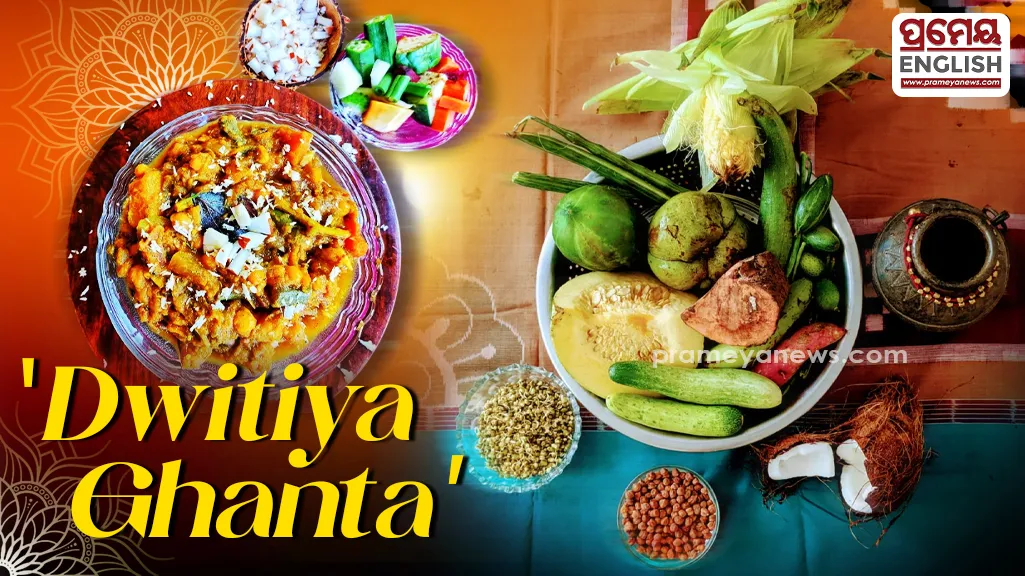
Bhubaneswar, Oct 4: Odisha’s festivals are closely connected with food traditions, and Dwitiya Ghanta, also known as Dutia Ghanta, is one such tradition observed during Mula Ashtami. On this occasion, families prepare a special mixed-vegetable dish known as Ghanta Tarkari, bringing together a wide variety of vegetables, legumes, pulses and sprouts in a single preparation.
Why is Dwitiya Ghanta celebrated?
Dwitiya Ghanta is associated with the Mula Ashtami observance during the Shodasha Puja period. The day is considered significant in Odisha’s traditional festive calendar, particularly in connection with the worship of the Goddess.
Food forms an important part of the observance. The preparation of Ghanta Tarkari reflects the idea of bringing together different seasonal vegetables and pulses in one dish. Traditionally, it is prepared in large quantities and shared with relatives, neighbours and members of the community.
The practice of cooking and sharing Ghanta is also seen as a way of strengthening community bonds and togetherness. The dish itself represents this idea of unity, with many different ingredients coming together to create one preparation.
Ghanta is not limited to Dwitiya Ghanta. A similar tradition is followed during Samba Dashami, when Ghadaghadia Ghanta is prepared.Manorama Sahoohighlighted the community aspect of Dwitiya Ghanta, saying that preparing Ghanta in large quantities and sharing it with neighbours and relatives reflects the traditional spirit of togetherness in Odia households.
Minati Pattanaiksaid the tradition of preparing Ghanta Tarkari during Mula Ashtami is deeply connected with Odisha’s food culture. She noted that the dish brings together seasonal vegetables, pulses and sprouts, making it both nutritious and closely associated with the spirit of sharing.
What is Ghanta Tarkari?
Ghanta Tarkari is a traditional Odia mixed-vegetable preparation made using a combination of vegetables, pulses, legumes and sprouts.
The exact ingredients can vary from household to household, but a traditional preparation may include around 21 different vegetables, pulses and sprouts.
Common ingredients include:
Potato
Radish
Pumpkin
Raw banana
Brinjal
Pointed gourd
Elephant yam
Colocasia
Long beans
Different legumes and pulses
Sprouts
Coconut
The combination makes Ghanta a wholesome and filling dish, packed with vegetables and plant-based ingredients.
How to make Ghanta Tarkari
Ingredients
Potato – 2
Raw banana – 1
Pumpkin – 1 cup
Radish – 1
Brinjal – 1
Pointed gourd – 2
Elephant yam – 1 cup
Colocasia – 1 cup
Long beans – 1 cup
Mixed soaked pulses and legumes – 1 to 1½ cups
Mixed sprouts – ½ cup
Grated coconut – ½ to 1 cup
Turmeric – ½ teaspoon
Cumin seeds – 1 teaspoon
Mustard seeds – ½ teaspoon
Dry red chillies – 2
Ginger – 1 small piece
Salt – to taste
Oil – as required
Water – as required
Preparation
First, wash and cut all the vegetables into medium-sized pieces. Soak the pulses and legumes in advance and keep the sprouts ready.
Heat oil in a large heavy-bottomed pan and add mustard seeds, cumin seeds and dry red chillies. Once they begin to splutter, add the prepared vegetables and soaked pulses.
Add turmeric, salt and a little water. Cover the pan and allow the mixture to cook slowly over low to medium heat. Stir occasionally so that the vegetables cook evenly without breaking apart completely.
Once the vegetables and pulses become tender, add the sprouts and continue cooking for a few minutes.
Finally, add grated coconut and gently mix everything together. Allow the Ghanta to simmer for a few more minutes so that the flavours come together.
The finished dish should be soft, flavourful and thick, rather than watery.