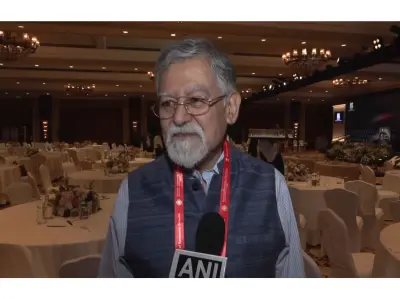



New Delhi, Oct 3: The ongoing conflict in West Asia could have far reaching economic and geopolitical consequences globally, particularly due to its impact on oil prices, inflation and political outcomes, economist Amartya Lahiri, Professor of Economics at the University of British Columbia, said.
Speaking to ANI on the sidelines of the Kautilya Economic Conclave, Lahiri said the economic repercussions could be “massive”, given the central role of energy prices in the global economy.
“Once oil prices start moving, a lot of things get impacted in a first-order way,” Lahiri said, pointing to the multiple channels through which fluctuations in crude oil prices can affect economies.
According to the economist, higher energy cost can translate into increased inflationary pressures, potentially influencing economic policy decisions and political outcomes. He said the ongoing tensions could extend beyond West Asia, affecting major economies including the United States.
Lahiri also cautioned against making predictions on the possibility of an end f the conflict saying that it would ultimately depend on political developments. The economist also commented on US pressure on countries such as India over purchases of Russian oil. He questioned the sustainability of imposing tariffs on countries that continue to buy Russian energy. He said countries have to protect their economic interests while navigating through geopolitical pressures. Referring to India, Lahiri said India, as a relatively poorer economy, needs to source supplies where it can.
He said countries have to protect their economic interests while navigating geopolitical pressures. Referring to India, Lahiri said the country, as a relatively poorer economy, needs to source energy supplies where it can. The economist said the Indian government had managed the pressure surrounding Russian oil purchases reasonably well. He also suggested that proposals for imposing extremely high tariffs could face practical limitations.
On the broader issue of de-dollarisation, Lahiri said reducing dependence on the US dollar would be difficult because of the currency's deep integration into the global financial system. While countries may seek alternatives, he noted that no other currency currently combines the dollar's stability, long history and widespread global acceptance.
However, the economist said developments in digital finance could play a role in reshaping certain aspects of the international monetary system in the future. The Kautilya Economic Conclave brings together policymakers, bureaucrats, politicians and academics to discuss major economic and geopolitical challenges facing India and the global economy. (ANI)