


Indian security agencies intercept contraband worth Rs 3,000 crore near Lakshadweep
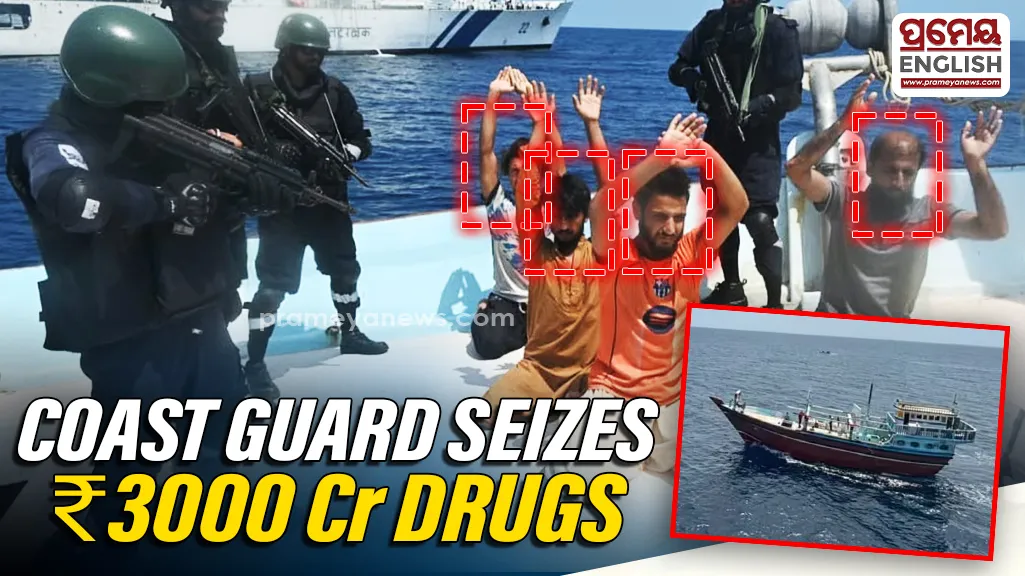
Indian security forces intercepted an Iranian dhow in the Arabian Sea west of Lakshadweep, recovering 526 kilograms of illicit narcotics valued at over Rs 3,000 crore in international markets. Acting on actionable intelligence, a joint strike team comprising the Gujarat Anti-Terrorist Squad (ATS) and the Indian Coast Guard tracked and boarded the suspicious vessel, named Azad, following a coordinated sea-air chase on September 25. Five crew members aboard the dhow, identified as Pakistani nationals from Peshawar, were taken into custody and brought to Mumbai under armed escort for joint questioning.
Intelligence trail from Ahmedabad
Gujarat ATS officials initiated the covert operation following specific inputs received by Inspector JM Patel on September 10. Intelligence revealed that a Nigerian operative held clandestine meetings in Ahmedabad to orchestrate the maritime transit of roughly 500 kilograms of illicit substances. Financial transactions were routed through illegal hawala channels, with partial advance payments cleared before dispatch. Key logistics pointed to wanted narcotics kingpin Haji Salim, whose syndicate arranged the consignment and equipped the vessel with a Starlink communication terminal to coordinate mid-sea transfers.
Interception in deep waters
Following operational clearance, an ATS team led by Superintendent of Police K Siddharth traveled to Kochi to embed with the Indian Coast Guard. Tactical maritime units deployed into waters stretching along the Mumbai-Kochi-Lakshadweep corridor. On September 25, Indian patrol vessels detected the target craft maneuvering within Indian territorial waters. Boarding teams secured the vessel and detained five men: Mohammad Yakub Balochi, Shakirullah, Faridullah, Ahmed Khan, and Wahidullah Khan.

Preliminary interrogation revealed that the boat sailed from Konarak in Iran after loading cargo transferred from another vessel originating in Gwadar, Pakistan. Laboratory evaluations confirmed the cargo contained roughly 400 kilograms of methamphetamine and 126 kilograms of high-grade heroin. Syndicate handlers had planned to offload the consignment along the Tamil Nadu coastline before dispatching smaller vehicular shipments to distribution rings in Punjab. Maritime routes across the western Indian seaboard increasingly face heightened surveillance as transnational networks attempt to establish supply chains targeting domestic urban markets.
Image Courtesy: Indian Coast Guard