
.webp)


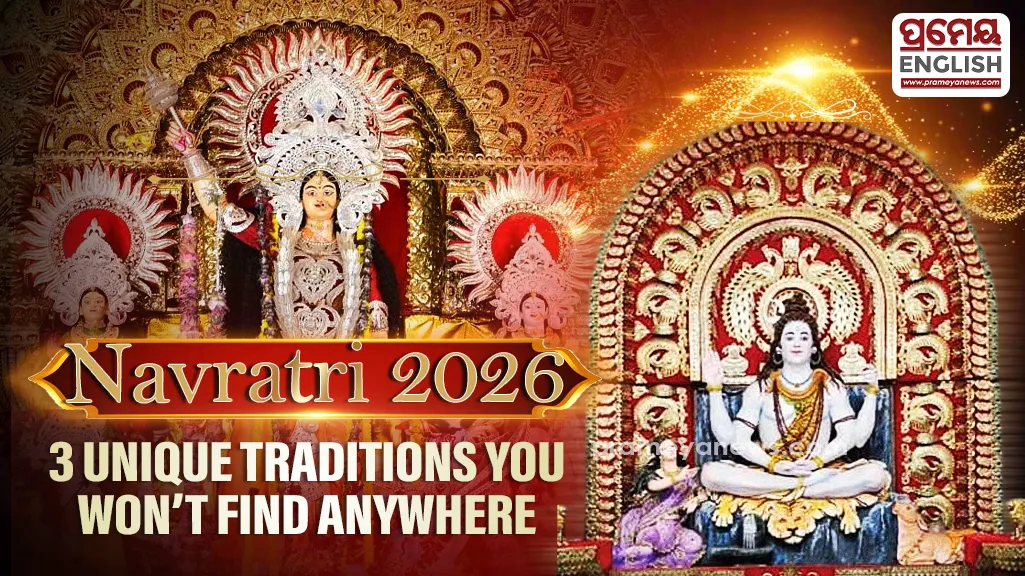
Cuttack, Oct 1: Durga Puja in Cuttack is known not only for its grand pandals and silver filigree decorations, but also for its unique traditions. In several parts of the city, age-old rituals and distinctive forms of worship make the celebrations different from the usual Durga Puja traditions.
📲Follow our WhatsApp Channel for the latest news, breaking updates, and important headlines. Stay connected with us for more updates!
From the brass Mahadev idol at Telenga Bazar to the two-armed Maa Bagalamukhi at Bhagatpur and the Vrishabha Vahana form at Town Hall Road, these pujas reflect the rich cultural diversity of Cuttack.
Telenga Bazar Puja: A Brass Mahadev and a 40-Year Tradition
The Telenga Bazar Puja Committee is popularly known for its brass tableau. Durga Puja has been organised here for more than five decades, with Mahadev worshipped as the main deity.
In 2022, a brass idol of Mahadev weighing more than 150 kg was installed. The idol was crafted by Cuttack-based artisan Sujit Maharana of Bangalisahi.
Also Read: Durga Puja 2026: Dubai-Style Pandal to be big attraction at Bomikhal
This year, however, the celebrations are being held in a simple manner following the death of committee Mahant Pranakrushna De.
One of the most distinctive traditions here takes place on Visarjan day. A special platform is set up near Debigada, where the Mahadev idol is placed. Each puja committee participating in the immersion procession is then honoured with a bhog handi and flower garland, while its office-bearers are also felicitated.
According to committee secretary and advocate Alok Mahapatra, the tradition of honouring the participating puja committees has continued for more than four decades.
The committee has also decided to complete the celebrations while following government rules and guidelines.
Bhagatpur: Where Maa Durga Is Worshipped With Two Arms
At Bhagatpur, the presiding deity Maa Bagalamukhi is worshipped in a distinctive form during Durga Puja.
Unlike the traditional ten-armed form of Maa Durga, the goddess here is depicted with two arms. In one hand, she holds a mace, while with the other, she holds the tongue of the demon.
Also Read: Durga Puja 2026: Clay collection rituals held in Bhubaneswar’s various locations
Another unique feature is the colour associated with the deity. Yellow dominates almost every aspect of the puja. The goddess is dressed in yellow, yellow flowers are offered, and even the sindoor, annabhog and tent decorations follow the same colour theme.
The idol is shown standing over a demon rather than on a lion, while another demon is depicted beside her.
The puja also features silver ornaments for the goddess and the accompanying deities. Three illuminated gates will add to the decoration, while the immersion procession will feature both band music and traditional musical instruments.
Town Hall Road: A Unique Vrishabha Vahana Form
At Town Hall Road, Maa Goshamani has been worshipped at the local shrine for decades. The Durga Puja tradition here began in 1950, when an idol of Har-Parvati was first worshipped during Dussehra.
After a permanent mandap was constructed in 1978, the tradition continued at the site.
The committee has experimented with distinctive themes over the years. Last year, the idol was based on Siddhilakshmi of Nepal. This year, devotees will witness the Vrishabha Vahana form.
The form is associated with Nandi, the sacred white bull who is regarded as Lord Shiva's vehicle and gatekeeper. Nandi is traditionally seen as a symbol of strength, loyalty and unwavering devotion.
The committee is headed by president Abhaya Satapathy, while Dr Dipayan Pattnaik is serving as secretary.
Cuttack's Durga Puja Is More Than Grand Decorations
These traditions show why Cuttack's Durga Puja is much more than a festival of elaborate pandals and decorations. Across different neighbourhoods, local communities continue to preserve their own forms of worship, rituals and customs.
From a massive brass Mahadev idol and the yellow-themed two-armed goddess to the Vrishabha Vahana form, these distinctive traditions add another layer to the cultural identity of Cuttack's Durga Puja.
.webp)