

.webp)


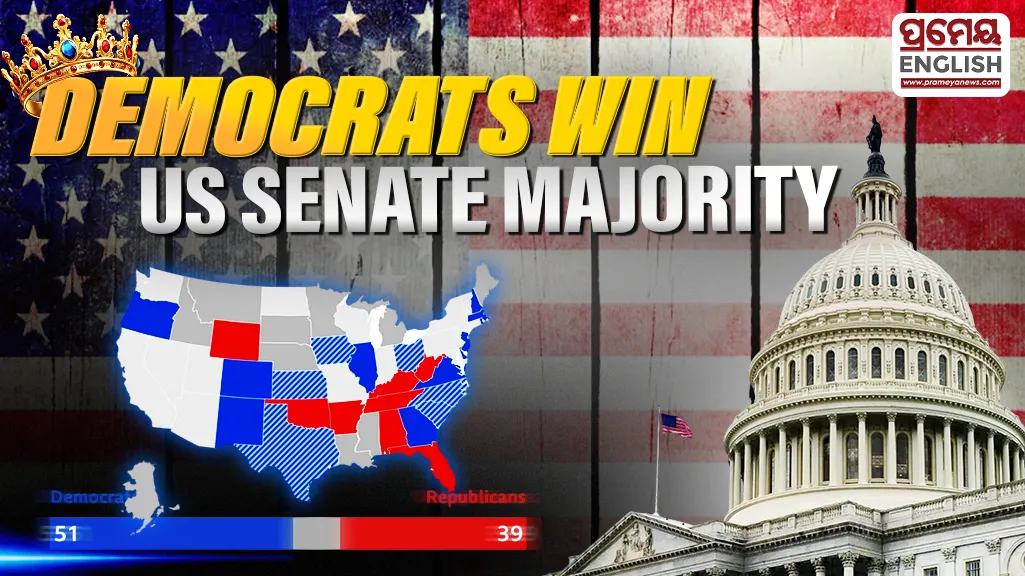
Democrats capture US Senate majority sweeping critical red states
Democrats secured firm control of the upper chamber during Tuesday's midterm contests, overturning decades of conservative dominance across six key Republican strongholds. By seizing previously secure red territories like Texas, Iowa, and Ohio, the blue faction has established a commanding lead that promises to complicate legislative plans during President Donald Trump's remaining tenure. Economic frustrations, specifically surging daily expenses, combined with dissatisfaction surrounding the Iran conflict and dipping presidential approval ratings, fueled this nationwide voter shift away from the 80-year-old leader's platform.
Breaking nearly a century of political tradition, voters in Kansas elected Methodist pastor Adam Hamilton to the upper house over incumbent Roger Marshall, marking the first Democratic Senate victory there in 94 years. This upset occurred despite multiple recent campaign visits from the chief executive. Similar long-standing barriers fell in South Carolina and Texas, where Annie Andrews and James Talarico defeated Darline Graham and Ken Paxton respectively, securing Democratic representation for the first time in three decades. Adding to the historic electoral shift, Gina Hinojosa claimed the Texas gubernatorial seat from three-term incumbent Greg Abbott. She became the state's first Latina governor, effectively ending a conservative statehouse streak dating back to 1990.
House control looms for victorious democrats
Securing a total of 192 lower chamber seats thus far, the blue faction requires only three additional district victories to claim complete authority over Congress. Notable gains emerged in North Carolina, delivering the party's initial breakthrough when Jamie Ager claimed an open House seat and Roy Cooper ousted Michael Whatley for the state's first Democratic Senate win since 2008. In New Jersey, former military helicopter pilot Rebecca Bennet unseated two-term representative Tom Kean Jr. in a highly competitive district. Meanwhile, Bob Brooks leveraged his working-class roots to defeat Ryan Mackenzie in Pennsylvania, directly addressing voter concerns regarding inflation.
Legislative stand-offs anticipated
Midterm elections historically serve as a referendum on the sitting administration, often punishing the incumbent party during periods of international conflict and domestic economic strain. Should they successfully capture both legislative branches by holding their remaining districts, opposing lawmakers will gain significant leverage to initiate formal inquiries, issue subpoenas, and block executive initiatives. Nevertheless, enacting their own agenda will face formidable obstacles due to the lingering threat of presidential vetoes and established parliamentary delays within the upper chamber.
.webp)