
.webp)

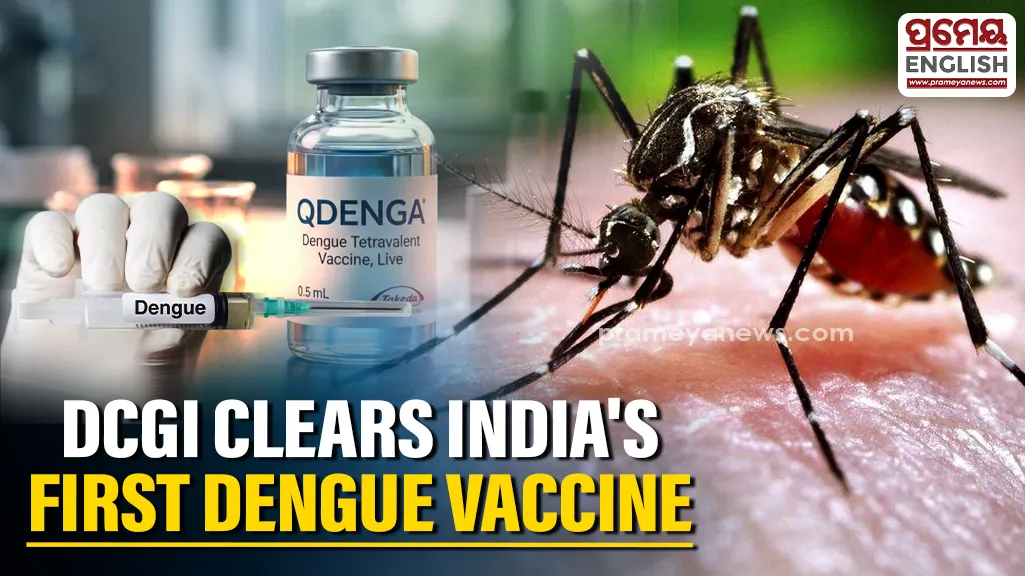
India grants historic approval for first universal dengue immunisation
India has officially greenlighted its first vaccine to fight dengue fever after regulators granted market authorization to Takeda Biopharmaceuticals. Regulators from the Drug Controller General of India (DCGI) cleared Qdenga for individuals between four and 60 years old. This decision marks a major breakthrough for public health officials battling one of the fastest-growing vector-borne threats in South Asia. States like Odisha, particularly districts such as Khurda and Cuttack, face severe seasonal outbreaks where annual monsoon humidity turns urban centers into high-risk breeding zones.
Protection without Prior Screening
Historically, previous immunisation options required patients to undergo blood testing to prove they already had a prior infection. Qdenga removes this hurdle completely. Medical professionals can now administer the two-dose regimen regardless of a patient's past exposure history. This flexibility drastically simplifies deployment strategies in high-transmission areas. World Health Organization experts actively recommend this approach for endemic settings, confirming the formula meets rigorous international safety and efficacy benchmarks.
Company representatives highlighted that seven years of continuous clinical data prove sustained defense against all four circulating virus variants. Their global development program involved more than 28,000 participants across diverse geographical regions. Furthermore, specific Phase III studies verified safety profiles and immune responses among Indian populations, ensuring local effectiveness.
Expanding Domestic Supply Lines
Producing enough vials remains a top priority to meet domestic healthcare demands. Takeda recently partnered with Biological E, a prominent domestic manufacturer, to scale up supply chains efficiently. Both companies aim to produce 50 million doses annually at local facilities in the near future. This collaboration aligns with a broader corporate goal to distribute 100 million doses worldwide by the end of the decade. With national infection rates climbing elevenfold over the past twenty years, health authorities view this medical advancement as a critical addition to traditional mosquito surveillance and vector control methods.
.webp)