
.webp)



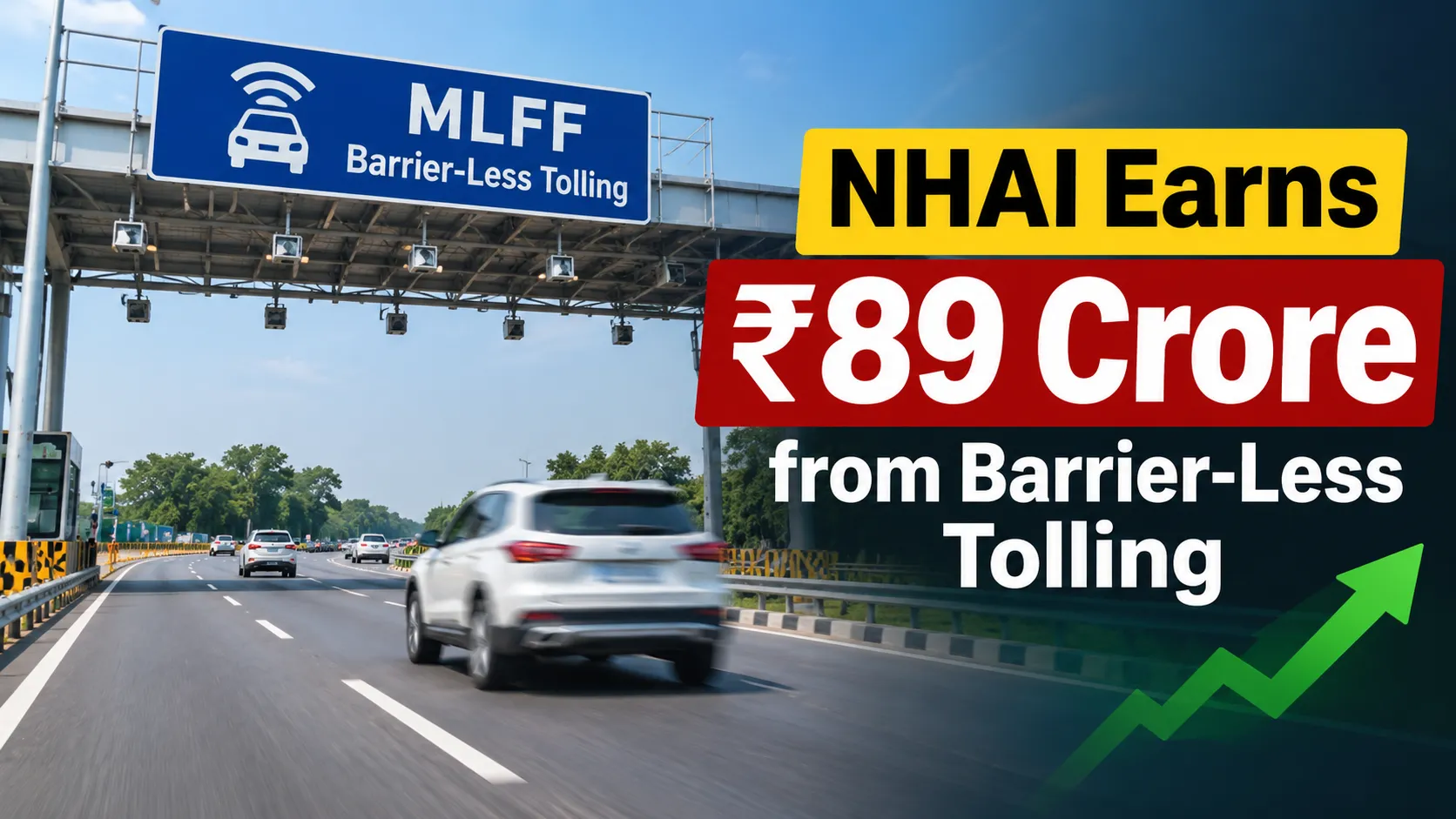
New Delhi, Nov 23: The National Highways Authority of India (NHAI) has recorded a 19.84 per cent increase in net toll revenue following the introduction of the barrier-less Multi-Lane Free Flow (MLFF) tolling system, the Ministry of Road Transport and Highways said on Monday. As per the press release issued by the Ministry, seven plazas generated Rs 538.95 crore in net revenue, an increase of Rs 89.23 crore over the same period last year.
Also read: MHA warns WhatsApp Web users of account hijacking risks, advises caution on shared computers
The revenue growth was recorded as of October 31, 2026, across seven plazas where the MLFF system has been operational. The ministry attributed the increase to higher transaction volumes, lower collection costs and improved efficiency in toll collection, which have also helped reduce revenue leakage.
Among the seven plazas, Paranur in Tamil Nadu recorded the highest revenue growth at 26.95 per cent, followed by Manoharpura in Rajasthan at 24.51 per cent and Mundka in Delhi at 23.55 per cent. Choryasi in Gujarat registered a 23.06 per cent increase, while Gharaunda in Haryana recorded 17.39 per cent growth. Shahjahanpur in Uttar Pradesh and Daulatpura in Rajasthan reported increases of 16.57 per cent and 15.66 per cent, respectively.
The average revenue growth across the seven plazas stood at 21.10 per cent, while the combined weighted increase was 19.84 per cent.
The ministry also highlighted the role of technology-enabled enforcement in improving toll collection. Around 60 per cent of the value of e-notices issued across these plazas has already been recovered, indicating progress in tracking vehicles that pass through toll points without making payments.
However, NHAI has identified cases of vehicle owners concealing or tampering with registration number plates to evade toll charges. To prevent such violations, the authority is deploying artificial intelligence-based solutions, including vehicle fingerprinting and integration with the VAHAN database, to identify offenders and recover outstanding toll dues.
Police check posts have also been established at selected MLFF locations, including Gharaunda in Haryana, to intercept violators and initiate action under the Motor Vehicles Act, 1988.
The MLFF system was first introduced at the Choryasi Fee Plaza in Gujarat on May 1, 2026, and has subsequently been expanded to eight additional plazas. Nemili and Chenasamudram, which became operational in November, were not included in the seven-plaza revenue assessment.
Unlike conventional toll collection systems, the barrier-less technology allows vehicles to pass through toll plazas without stopping for payment. It uses electronic identification and automated toll collection mechanisms to reduce congestion, travel time, fuel consumption, and vehicular emissions.
NHAI said it would continue expanding the system across the National Highway network while strengthening monitoring and enforcement mechanisms to prevent toll evasion and improve revenue collection.
.webp)