



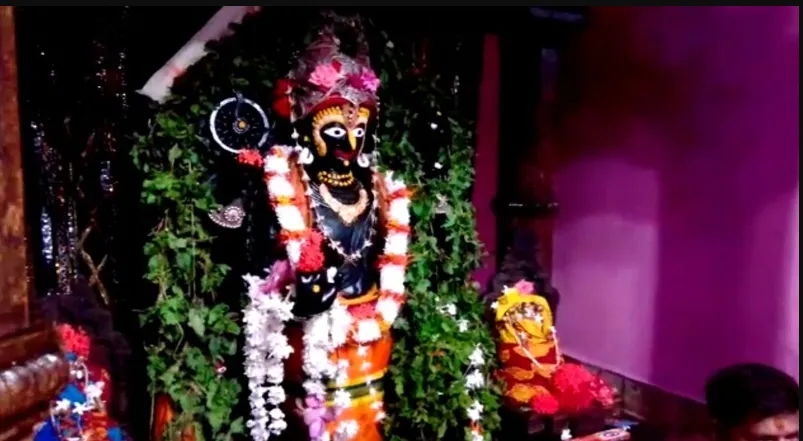
Brahmagiri, June 30: With the commencement of the sacred ‘Anabasara’ period following the Snana Purnima rituals, thousands of devotees have started thronging the Alarnath Temple at Brahmagiri in Puri district for the revered ‘Anabasara Darshan’. Beginning today, devotees who are unable to have darshan of Lord Jagannath, Lord Balabhadra and Devi Subhadra at the Jagannath Temple in Puri are instead offered a rare opportunity to worship the Holy Trinity in the form of Lord Alarnath.
The Anabasara period begins immediately after the ceremonial bathing festival (Snana Purnima), during which the deities of the Jagannath Temple are believed to fall ill after receiving the sacred bath with 108 pitchers of sanctified water. As part of the centuries-old temple tradition, the deities remain in seclusion inside the Anasara Ghara for around 15 days. During this time, the temple doors remain closed for public darshan as the deities undergo traditional Ayurvedic treatment, special rituals and rest under the care of the temple servitors known as Daitapatis.
According to Jagannath tradition, Lord Jagannath manifests Himself as ‘Lord Alarnath’, an incarnation of Lord Vishnu, during this sacred period. This belief has made the Alarnath Temple at Brahmagiri the principal pilgrimage destination for devotees during Anabasara. It is believed that offering prayers at Alarnath during these days grants devotees the same spiritual merit as having darshan of Lord Jagannath in Puri.
The Alarnath Temple holds immense religious significance, especially for followers of the Jagannath cult. Historical and religious texts mention that when the great Vaishnava saint Sri Chaitanya Mahaprabhu was unable to have darshan of Lord Jagannath during Anabasara, he visited Alarnath and worshipped the deity with deep devotion. It is believed that overwhelmed by his devotion, the stone beneath him melted, leaving an imprint that is still revered by devotees.
During the Anabasara period, elaborate rituals are performed daily at the Alarnath Temple. Special bhogas are offered to the deity, with the temple's famous Kheer (sweet rice) being regarded as one of the most sacred offerings. Thousands of devotees from Odisha and across the country visit the shrine during these fifteen days to seek blessings and participate in the religious observances.
The Anabasara Darshan will continue until the Holy Trinity reappears before devotees on ‘Nabajaubana Darshan’, marking the conclusion of their recuperation. This is followed by the world-famous Rath Yatra, when Lord Jagannath, Lord Balabhadra and Devi Subhadra emerge from the sanctum sanctorum to bless devotees before embarking on their annual chariot journey.
For devotees of Lord Jagannath, Anabasara is not merely a period of waiting but one of unwavering faith, where the divine presence of the Holy Trinity is experienced through Lord Alarnath until the Lords return to the Jagannath Temple in their rejuvenated form.