



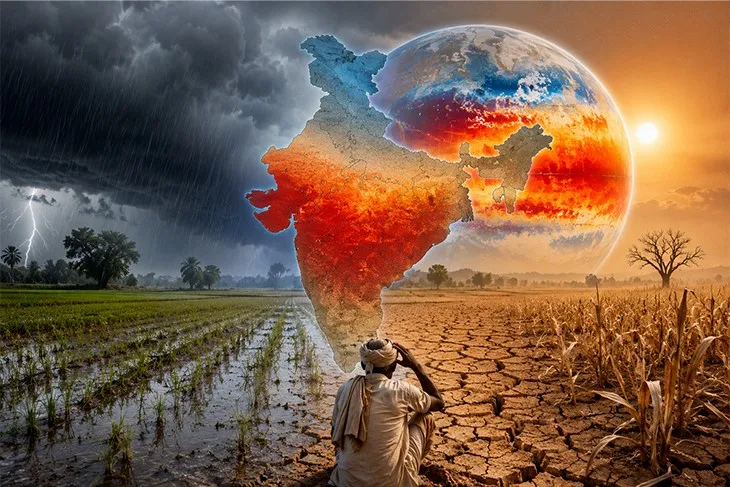
Record-breaking climate patterns threaten global winter weather conditions
Forecasters expect a potentially record-breaking El Niño to develop rapidly in the Pacific Ocean. Current predictions from the National Oceanic and Atmospheric Administration (NOAA) highlight a 69% probability that this climatic event will surpass all previous strength records dating back to 1950 during the October-December 2026 timeframe. Meteorologists also calculate a 90% likelihood of robust conditions fully forming by the Northern Hemisphere winter. Historically, this warm phase of the ENSO cycle alters global climates and elevates severe drought risks worldwide. Since the late 19th century, meteorologists have meticulously studied these oceanic anomalies to predict agricultural yields and prevent global food shortages.
Monsoon Status in India
For India, the immediate danger to the ongoing southwest monsoon remains relatively low because of a natural time delay. Weather changes triggered by Pacific surface temperature fluctuations usually require roughly 40 to 45 days to physically influence the Indian subcontinent. Consequently, any intense atmospheric shifts will likely arrive well after the official September 30 monsoon withdrawal date.
Despite avoiding these future disruptions, domestic rainfall totals already look problematic. India officially measured 491.8 mm of rain between June 1 and August 13, representing a 12% drop below standard expectations. June specifically suffered a sharp 35.4% deficit, even though July eventually recovered to near-normal levels. The India Meteorological Department (IMD) currently anticipates below-average precipitation continuing throughout August.
Local Ocean Factors Balancing Risks
One distinct natural mechanism might protect regional agriculture from extended seasonal dry spells. Forecasters continuously track the Indian Ocean Dipole (IOD), which essentially functions as a regional counterpart to broader Pacific fluctuations. While currently maintaining a neutral status, IMD experts confidently project this local dipole will shift into positive territory near the end of the season. Favorable positive conditions in this specific ocean zone frequently help neutralize adverse weather systems originating from far away.
Image Courtesy: Bhaskar English