


Rayagada. August 10: For years, the Dui-Muhan River was more than just a river for the people of seven remote villages in Rayagada district. It was a barrier between them and the outside world.
Nestled between hills and the river, the villages of Panasaguda, Kutinga, Pushaghati, Garilima, Ghurichara, Gadaramuhin and Singapata would virtually disappear from the map during the monsoon. As rainwater rushed down the hills and the river swelled, movement came to a halt.
For nearly six months every year, around 1,500 villagers were forced to live with the reality of being cut off.
For students, reaching school became a challenge. For families, taking a sick person to a health centre was a race against time. Ambulances struggled to reach the villages, while pregnant women and critically ill patients often had to endure difficult journeys to access medical care.
For years, villagers appealed to ministers and government officials, seeking a permanent bridge. They received assurances, but little changed on the ground.
Eventually, they decided to build one themselves.
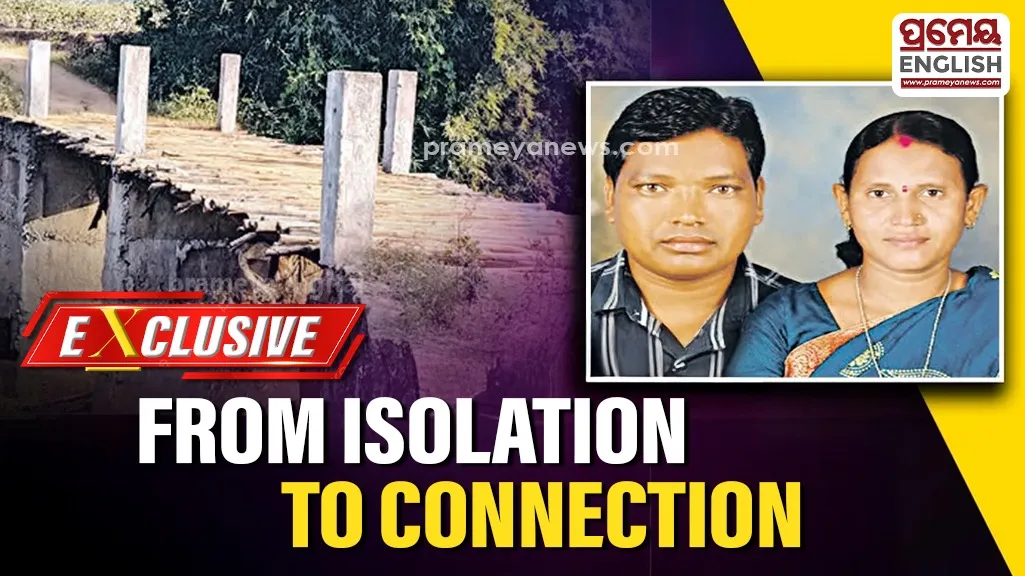
That was when Shyamadhar Majhi and his wife, Basanti Majhi, residents of Pushaghati village, stepped forward.
The villagers had initially planned to construct a simple wooden bridge with their own resources. But the couple believed that a temporary structure would not provide the safety and durability the community needed.
So they made a remarkable decision: they would bear the cost of building the bridge.
The couple spent around ₹3.70 lakh from their own pocket to turn the villagers' long-standing dream into reality.
The work began in February, with one clear deadline—the bridge had to be ready before the monsoon arrived.By May, the bridge was ready.
Stretching around 55 feet in length and 11 feet in width, the new structure has transformed everyday life for the people of the region. Motorcycles and auto-rickshaws can now cross the river, while students can travel more easily to schools in Godibali Gram Panchayat.
For the villagers, it is more than a bridge. It is a connection—to schools, hospitals, markets and the rest of the world.
The story of the bridge is also a story of community spirit. While Shyamadhar and Basanti provided the financial support, residents of the seven villages provided their labour. Together, they built what years of appeals and promises had failed to deliver.
Yet the villagers know that this is not the final answer.
The present structure has eased their difficulties, but they still want a properly engineered, permanent bridge that can withstand the force of the river during the monsoon.
The geographical isolation of these villages remains a major challenge. Panasaguda is located around two kilometres from Godibali Gram Panchayat, along the Kashipur–Shikarpai road via Mandibishi. Despite the road being under the Public Works Department, basic infrastructure remains inadequate in the surrounding area.
For villagers, the bridge is therefore both an achievement and a reminder of what is still missing.
After seven decades of Independence, they say, basic facilities should not remain a distant dream for communities living in such remote areas.
Rayagada Zilla Parishad Chairperson Saraswati Majhi has said that the matter will be discussed at the upcoming Zilla Parishad meeting and that necessary steps will be taken towards constructing a permanent bridge.
Until then, the modest bridge over the Dui-Muhan River stands as a powerful symbol of what determination and collective effort can achieve.
And for the 1,500 people who once spent half the year cut off by rising waters, every journey across it is a small but significant step towards a more connected life.