


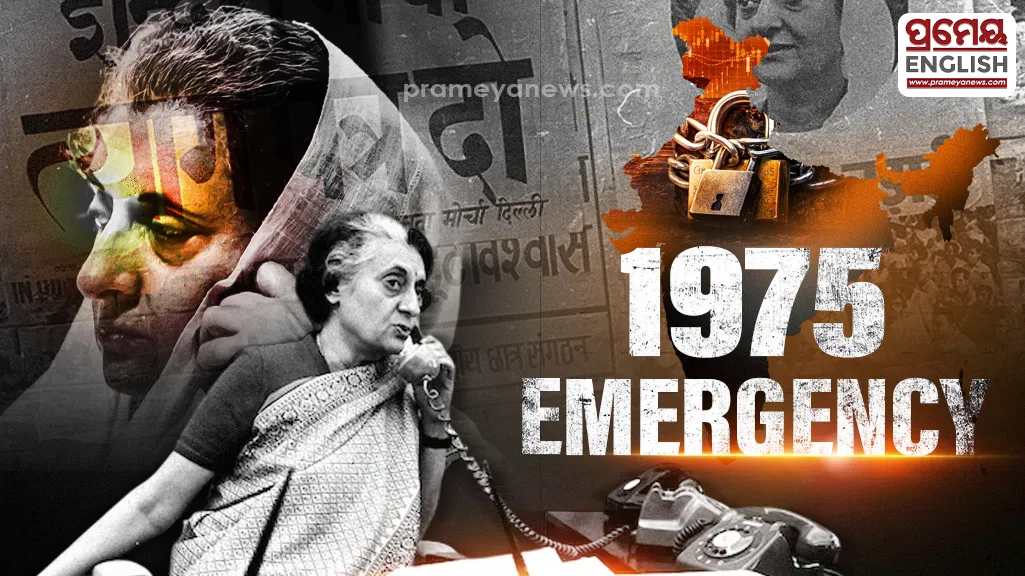
New Delhi, June 25: As India marks 50 years since the declaration of the Emergency, June 25, 1975, continues to stand as one of the most defining and debated chapters in the nation’s democratic history.
The Emergency was proclaimed amid a deep political crisis following a landmark judgment by the Allahabad High Court, which found then Prime Minister Indira Gandhi guilty of electoral malpractice during the 1971 Lok Sabha elections. The verdict triggered widespread political turmoil and intensified calls from opposition parties for her resignation.
Seeking legal relief, Indira Gandhi approached the Supreme Court. On June 24, 1975, the apex court granted a partial stay on the High Court’s ruling, allowing her to remain Prime Minister while restricting certain privileges as a Member of Parliament until the final hearing of the case.
Against the backdrop of escalating political unrest and a nationwide movement led by veteran socialist leader Jayaprakash Narayan, then President Fakhruddin Ali Ahmed signed the proclamation of Emergency around midnight on June 25, 1975. The Emergency was imposed on the grounds of “internal disturbance,” giving the central government sweeping powers.

The 21-month Emergency period significantly altered India’s political landscape. Fundamental rights were suspended, civil liberties were curtailed, and the government tightened its control over various institutions. Press censorship became one of the most controversial aspects of the period, with newspapers facing strict restrictions and pre-publication scrutiny.
Several prominent opposition leaders and activists were arrested under preventive detention laws, while public protests and political dissent were largely suppressed. Despite the restrictions, resistance movements continued in different parts of the country.

The Emergency remained in force until March 21, 1977, when it was formally withdrawn. Subsequent general elections led to a historic change in government, widely viewed as a reaffirmation of the strength and resilience of India’s democratic system.
Half a century later, the Emergency remains a crucial reference point in discussions on constitutional rights, democratic institutions, civil liberties and the balance of power in the world’s largest democracy.