



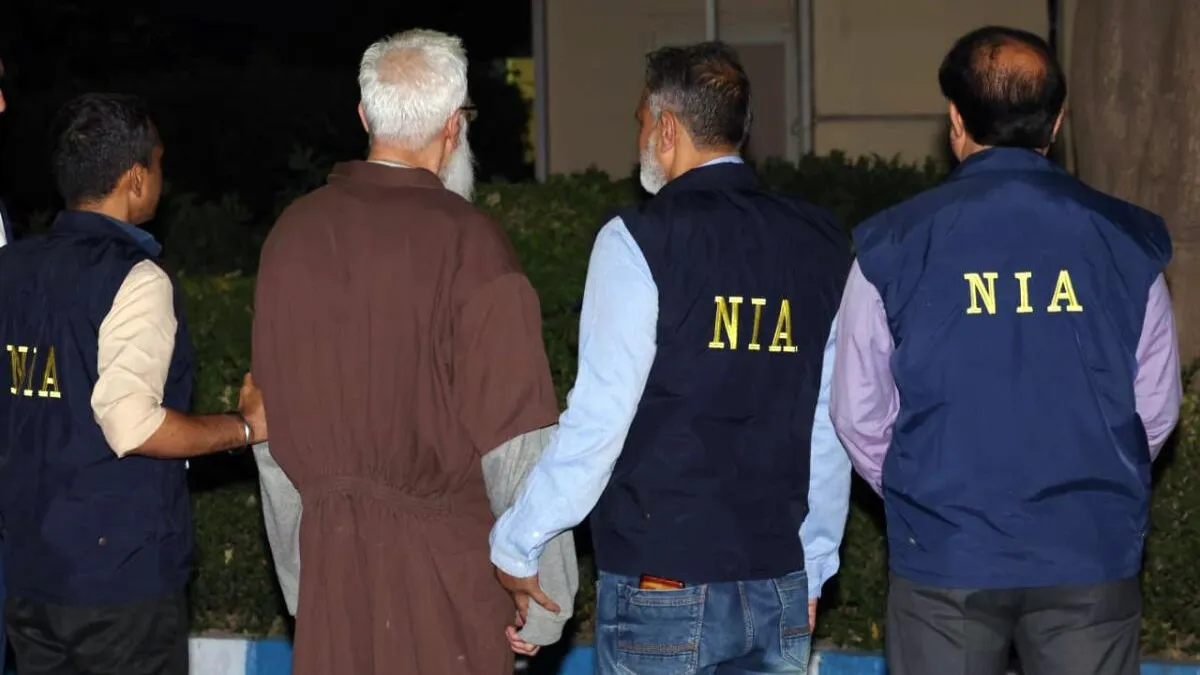
Delhi, August 4: India has brought back as many as 274 fugitive criminals from 36 countries since 2021, said an official release on Tuesday.
According to the Ministry of Home Affairs (MHA), the fugitives brought back to the country include individuals wanted in terrorism, gangsters, financial offenders, narcotics accused, and individuals wanted in cases of murder, rape, and offences under the Protection of Children from Sexual Offences (POCSO) Act.
Between 2004 and 2013, India secured the extradition of only four fugitives per year on average, while 110 extradition requests remained pending, said the MHA.
“Before 2014, the country's extradition framework had become outdated, and India had extradition treaties with only 37 countries. There was also no dedicated law to deal with economic fugitives or to confiscate their assets. Between 2004 and 2013, India secured the extradition of only four fugitives per year on average, while 110 extradition requests remained pending. In addition, incomplete documentation and slow processing made the extradition process highly cumbersome, often leading foreign courts to deny extradition requests,” said the MHA.
The Ministry said that the number of Interpol Red Corner Notices issued has increased significantly in recent years. Forty Red Corner Notices were issued in 2022, 100 in 2023, 107 in 2024, 112 in 2025, and 182 have already been issued in 2026 so far. To strengthen efforts to trace fugitive offenders, Operation Trishul was launched to geo-locate absconding criminals.
The campaign to bring fugitives back to India extends across cases involving terrorism, pro-Khalistan extremism, the gangster-terror nexus, narcotics trafficking, cyber fraud, and fake currency.
The extradition of Tahawwur Hussain Rana from the United States stands as a significant example of India's resolve and its sustained legal and diplomatic efforts in pursuing complex terror cases. In matters related to Jammu and Kashmir, fugitives operating from abroad had been used to sustain terrorism, narco-terrorism, and cross-border support networks, it said.
The success achieved in bringing fugitive offenders back to India is not the result of chance, but of credibility, thorough legal preparation, sustained diplomatic persistence, and continuous follow-up. At the domestic level, this effort has been driven by close coordination among the Intelligence Bureau, Central Bureau of Investigation, Research and Analysis Wing, National Investigation Agency, Enforcement Directorate, Ministry of External Affairs, Narcotics Control Bureau, Directorate General of Goods and Services Tax Intelligence, and State Police forces.
The constitution of a Standing Focus Group under the Multi Agency Centre (MAC) of the Intelligence Bureau in January 2026 marks a significant institutional step in strengthening India's fugitive management framework.