
.webp)


Kendrapara: As the festive spirit of Durga Puja sweeps across Odisha, Rajnagar in Kendrapara district stands apart for preserving a unique tradition that has survived for more than 200 years. Here, age-old rituals, traditional musical instruments and a distinctive boat ceremony continue to connect generations with their cultural roots.
The tradition is believed to have originated during the reign of the erstwhile Kanika kings. According to local folklore, the then ruler initiated the worship of Goddess Durga when a severe epidemic struck the region, seeking divine protection for the people. Since then, the practice has continued with devotion and grandeur.
Unlike celebrations dominated by loudspeakers and modern sound systems, Rajnagar’sDurga Puja retains its traditional character. The sound of conch shells, bells, gongs and mridangam accompanies the rituals, creating a distinct festive atmosphere. Organisers also maintain the practice of avoiding chemical colours.
This year, 31 Puja committees are worshipping Goddess Durga and other deities. Artisans have been working tirelessly to complete the idols, pandals and decorative arches ahead of the celebrations.
Also Read: Berhampur's Telugu families keep ‘Bommala Koluvu’ tradition alive
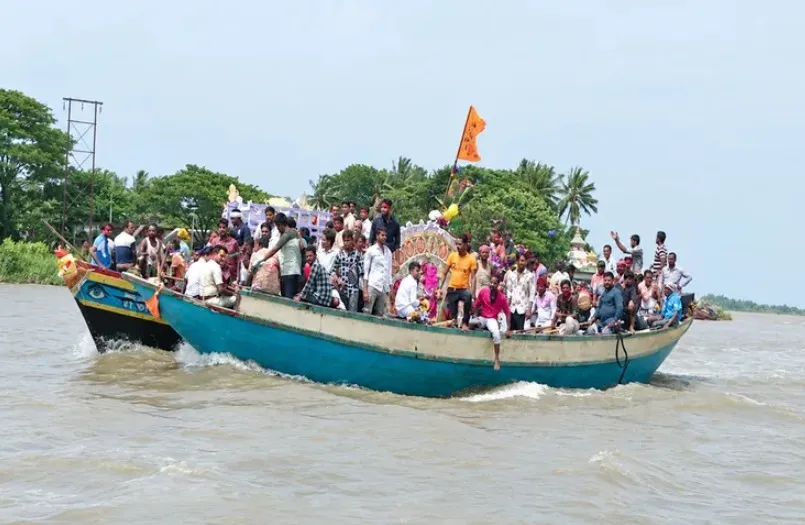
However, the most remarkable feature of Rajnagar’s festivities is its traditional immersion ceremony, known as the ‘Chapa’ ritual. Members of the Gopal, or Gauda, community carry the idol on their shoulders and place it on a decorated boat in the Hansua River. The boat then makes seven rounds before the goddess is bid farewell.
The unique ceremony draws devotees from across Odisha, with people gathering on the Hansua Bridge and along the riverbanks to witness the spectacle.
For local residents, the celebration is more than a religious occasion; it is a living symbol of their heritage. As the rhythms of traditional instruments echo through Rajnagar, the community continues to preserve a centuries-old legacy, ensuring that its distinctive Durga Puja traditions endure for generations to come.
.webp)