
.webp)


By Swadhin Sahu
Berhampur: Dussehra's festive spirit in Berhampur extends beyond Durga Puja, reflecting the city’s cultural diversity and shared traditions. Among Telugu families, Bommala Koluvu, the traditional festival of dolls, remains an important part of Durga Puja and Navratri celebrations. Once observed in more than 100 households, the tradition has dwindled over the years and is now confined to just four or five families.
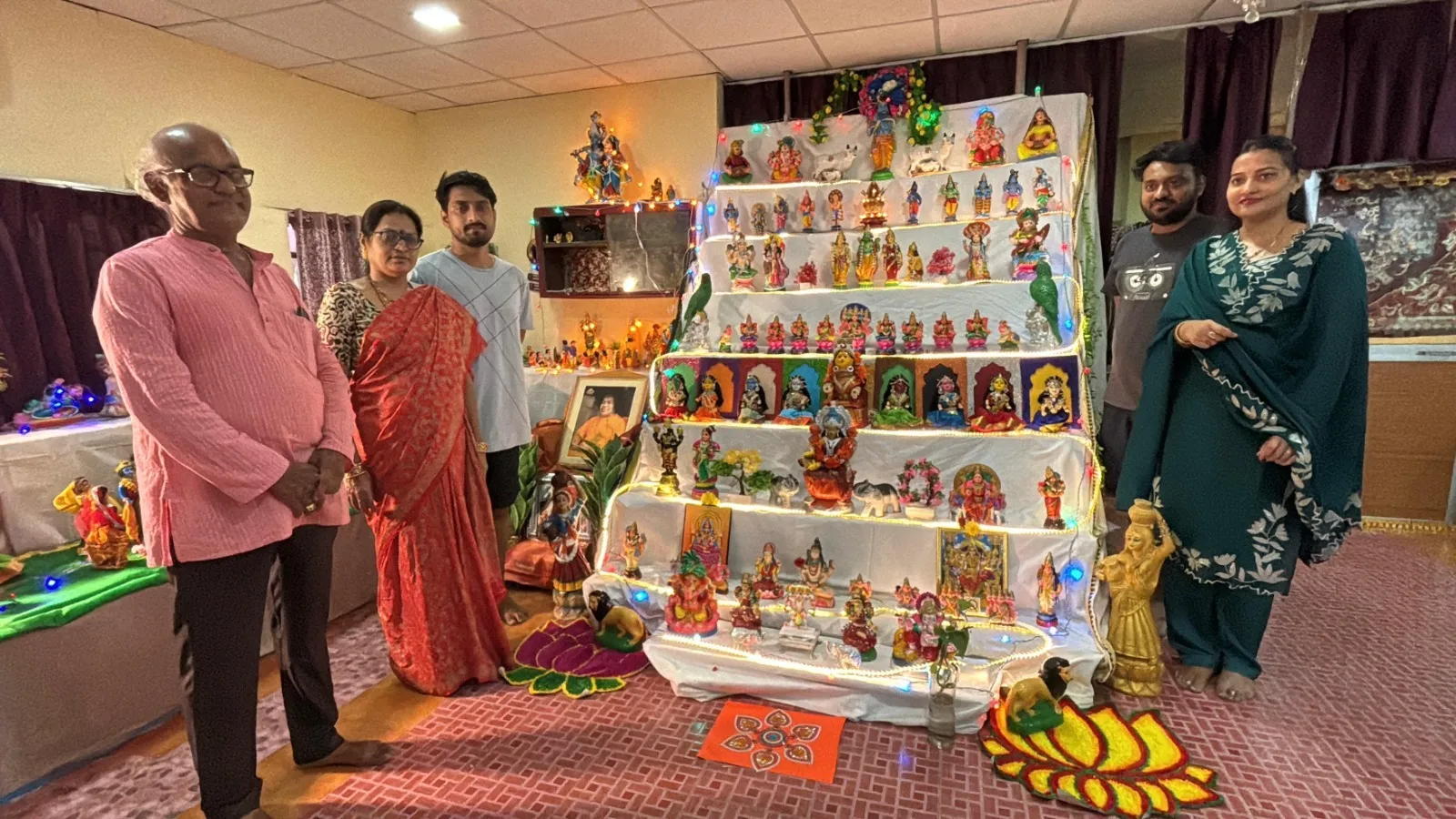
Among those keeping it alive are M. Venkat Rao and M. Padmavati of Braja Nagar 3rd Lane in the City, who have observed the tradition for 40 years, involving four generations of their family. Their home houses three clay idols, each more than 100 years old — two of MaaDurga and one of Lord Krishna — alongside a collection of more than 1,000 dolls gathered from yatras.
During Navratri, the dolls are arranged on nine steps, with each tier dedicated to a different theme. This year, Venkat Rao’s display features Astalakshmi, Shiva on Mount Kailash, Krishna JanmaLeela, Aranya Kanda, Navadurga, Dasavatar, SamudraManthan, Meera Bai’s devotion, yogasanas, village life and Gandhi’s three monkeys.
Also Read: City markets buzz with festive rush
The Puja begins on Mahalaya and concludes on Vijaya Dashami. Daily rituals include Balbhog, Rajbhog and Aarti. The seventh day features Lalita Parayan and bhajans, while Saraswati Puja marks the celebrations' culmination on Vijaya Dashami.
“We keep nine steps, each with a theme. The Krishna idol is 100 years old, from my mother-in-law’s time. We show Ramayana and Mahabharata so children don’t forget culture,” explains Padmavati. According to Venkat Rao, “My father started this when he was in the railways. Clay dolls were damaged in rain earlier; whatever remains, we have preserved.”
At Venkat Rao and Padmavati’s home, this tradition continues to bring family and community together. Their sons and daughters-in-law have travelled from London and Bengaluru this year to help set up the display. Neighbours and relatives also visit to see the doll fair and receive prasad.
For the family, the elaborate arrangement is not merely a festive decoration but an opportunity to preserve stories, rituals and memories that might otherwise fade with time. The involvement of four generations underscores their determination to keep the tradition relevant to younger family members.
At a time when changing lifestyles and modernity are pushing this South Indian tradition to the margins, the family’s efforts reflect a larger story about cultural preservation in Berhampur. Here, differences in language and regional customs do not necessarily divide communities; festivals offer opportunities to come together and celebrate shared values.
.webp)