


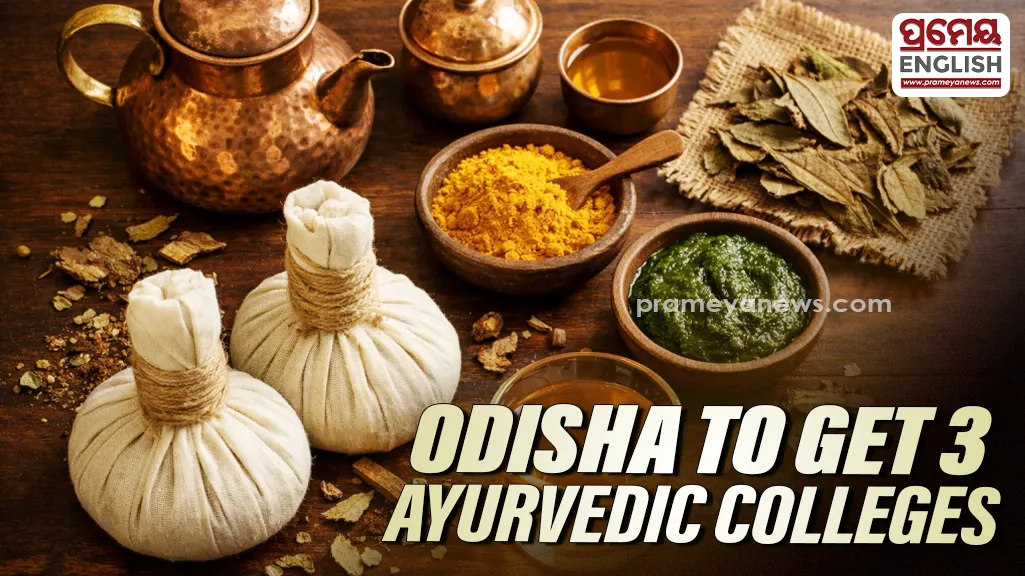
Bhubaneswar, Sept 23: Odisha is set to expand its government Ayurvedic healthcare and education network with three new Ayurvedic Medical Colleges and Hospitals in Malkangiri, Gajapati and Rayagada districts.
The state currently has three government Ayurvedic Medical Colleges and Hospitals in Puri, Berhampur and Balangir. The new institutions are planned to strengthen Ayurvedic education and make traditional healthcare more accessible to people in southern Odisha.
With World Ayurveda Day being observed tomorrow, the state government has intensified the process of identifying land for the proposed institutions. The Ayush Department has assigned the respective district administrations the responsibility of identifying and acquiring suitable land. Construction work will begin after the land is finalised.
The proposed colleges could also open new avenues for research into medicinal plants and forest-based resources. Malkangiri and Rayagada, with their forested and hilly terrain, offer access to diverse natural resources. According to an Ayush Department official, students could get opportunities to conduct field-based research and gain practical exposure to medicinal plants and other natural resources.
Meanwhile, two new Ayurveda-related technician training programmes are set to be introduced at the Central Ayurveda Research Institute (CARI) in Bhubaneswar.
The programmes are Panchakarma Technician Training and Ksharasutra Technician Training. The Panchakarma course will be of one-year duration with 10 seats, while the Ksharasutra Technician course will also have 10 seats.
Approvals for the Panchakarma Technician course have already been secured. The curriculum will cover procedures such as Vamana, Virechana, Nasya and Basti, including oil- and water-based therapies.
The Ksharasutra Technician course will focus on Ayurvedic treatment procedures related to conditions such as piles (Arsha) and fistula (Bhagandara).
The expansion is expected to strengthen Ayurvedic education, research and healthcare facilities across Odisha, particularly in the southern districts.