
.webp)


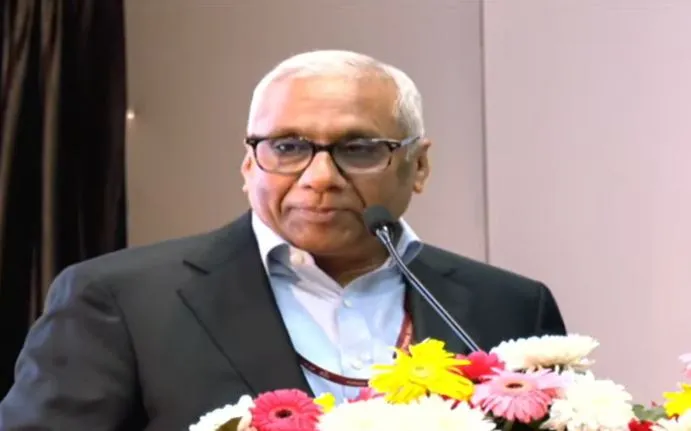
Bhubaneswar, March 19: India’s ambition to become a “Viksit Bharat” (Developed India) by 2047 is being driven by a rapidly expanding grassroots-led innovation ecosystem, according to Deepak Bagla, Mission Director of the Atal Innovation Mission (AIM) at NITI Aayog.
Speaking about the country’s innovation roadmap during an interview with prameyanews.com, Bagla highlighted that the strategy is centered on a bottom-up approach, nurturing ideas from schools, villages, and small towns, and scaling them into successful enterprises.
India’s startup ecosystem has witnessed significant growth over the past decade. Since the launch of the Startup India initiative in January 2016, the country has emerged as one of the top three startup ecosystems globally. To strengthen this growth, AIM was launched in February 2016 and has since evolved into what Bagla described as the world’s largest grassroots innovation mission, engaging over 1.1 crore young student entrepreneurs.
A key pillar of this ecosystem is the Atal Tinkering Labs (ATLs), which have been set up in 10,000 schools across the country. These labs provide students with access to tools, technologies, and mentorship to foster innovation at an early stage. The government is now planning a major expansion, aiming to establish an additional 50,000 labs, particularly in government schools.
According to Bagla, these labs are already generating innovative prototypes addressing both local and national challenges.
As ideas progress beyond the school level, incubators are playing a critical role in transforming them into viable businesses. AIM currently supports more than 100 incubators and is in the process of adding 50 more, said Bagla.
These incubators help entrepreneurs develop business models, connect with investors, and build sustainable ventures, while also collaborating with state governments to leverage regional strengths.
Bagla also emphasized India’s growing reputation for frugal innovation, which is attracting international interest from countries seeking partnerships with Indian startups.
He underlined the importance of inclusivity in the innovation ecosystem, noting that efforts are being made to enable entrepreneurship in multiple Indian languages.
Introducing the concept of “Social Unicorns,” Bagla said the focus is shifting beyond valuation-driven startups to those that can impact over a billion lives. These ventures aim to solve socially relevant problems.
The Indian startup ecosystem has also matured beyond service-based models, with startups now emerging from across districts and operating in more than 50 sectors. There is a notable rise in deep-tech innovation in areas such as space technology, fintech, and advanced healthcare, reflecting the ecosystem’s growing capability to address complex challenges.
Highlighting India’s demographic advantage, Bagla said the country’s large and youthful population is a key driver of innovation. Educational institutions are playing a central role in preparing a new generation of innovators, equipping them to lead in emerging fields such as artificial intelligence.
On the path forward, Bagla stressed that perseverance and strong team-building are essential for entrepreneurial success. With the backing of a fast-growing economy and a comprehensive government support system, he noted that Indian innovators are currently in a “sweet spot” to compete globally.
.webp)