

.webp)


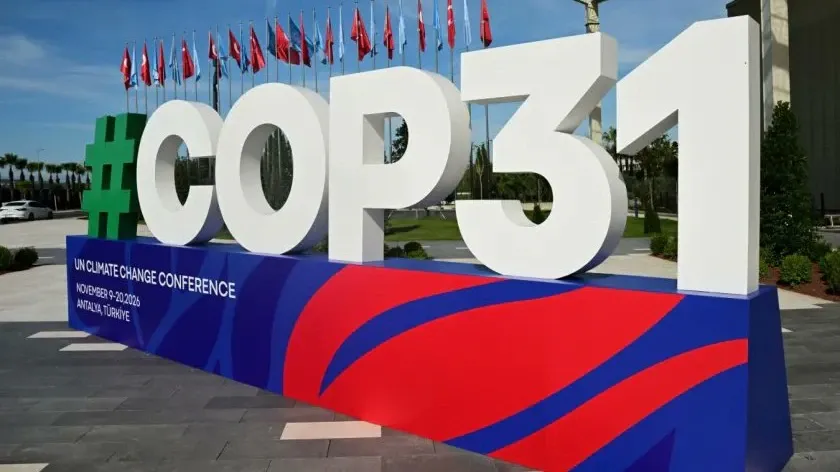
Global climate negotiators convene to tackle urgent financing gaps
World leaders and climate scientists have convened in Antalya, Turkiye, for the 31st United Nations Climate Change Conference (COP31), focusing on urgent climate finance and adaptation strategies. Running until November 20, this global summit addresses escalating concerns over record-breaking temperatures and erratic weather patterns. Data from the recent UNEP report warns that global temperatures are dangerously close to breaching the 1.5-degree Celsius threshold. September 2026 ranked as the second-hottest on record, reaching 1.63 degrees Celsius above pre-industrial levels, following a similarly warm August. These prolonged heat metrics signal an immediate requirement for scaled-up international intervention.
Also read: Meteorological Centre predicts dry spell with falling mercury levels throughout Odisha
India demands fair climate finance For developing nations, the consequences of extreme weather are already severe. Records from the Centre for Science and Environment and Down To Earth indicate that extreme weather events impacted Indian communities on 331 out of 334 days between January and November 2025. These patterns continued into 2026, with the southwest monsoon recording a 13 percent rainfall deficit while a strengthening Pacific El Nino threatens further agricultural stress. Pacific sea surface temperatures reached an unprecedented 30 degrees Celsius in October. Union Minister of Environment, Forest and Climate Change Bhupender Yadav has stated that the delegation will prioritize predictable, affordable, and public climate finance from developed nations. The delegation also insists that any new climate commitments must respect differing national circumstances rather than imposing uniform targets on countries with diverse developmental needs. Protecting vulnerable coastal communities and supporting farmers during the clean energy transition remain core priorities.
Building on previous discussions Discussions in Antalya will build upon last year's COP30 negotiations in Brazil, where nations agreed to boost adaptation funding but could not establish a firm roadmap for phasing out fossil fuels. The primary challenge over the next two weeks involves bridging the divide between emission reduction targets and the equitable financial frameworks required to protect vulnerable populations globally.
.webp)