
.webp)
Bhubaneswar, Aug 19: The Odisha government has approved a master plan to redesign and redevelop 23 major intersections across Bhubaneswar with a focus on smoother traffic movement, pedestrian safety and reducing congestion.
The master plan has been prepared after a joint sub-committee comprising officials from the Works Department, Commissionerate Police, Bhubaneswar Municipal Corporation (BMC), WATCO and TPCODL inspected the major junctions and assessed their existing designs.
Under the plan, left-turning lanes at all 23 junctions will be widened to facilitate smoother vehicle movement. Roadside encroachments, illegal structures and unauthorised roadside vending near the intersections will also be removed wherever required.
The redevelopment work will be carried out in phases. Odisha Bridge & Construction Corporation (OBCC) will undertake redevelopment of 10 junctions, while the remaining 13 will be taken up by the Works Department.
Authorities have also decided that bus stops will not be located immediately adjacent to major junctions. At some locations, intersections may be redesigned as roundabouts to improve traffic flow.
Senior Works Department officials said work is expected to begin shortly in accordance with the approved master plan.
What Will Change at Major Bhubaneswar Junctions?
Acharya Vihar Square
The median will be extended from Acharya Vihar Square towards Niko Park Square. An illegal portion of a vending zone near the junction is also proposed to be removed.
Sishu Bhavan Square
The boundary wall of Sishu Bhavan will be shifted inward to create additional road space. The bus stop near the junction will also be relocated slightly away from the intersection.
Kalpana Square
Fruit stalls and an OMFED parlour near Kalpana Square will be removed to widen the road. The left-turn lane towards Laxmisagar will also be widened.
All bus stops near the junction are proposed to be shifted farther away to prevent congestion.
Ravi Talkies Square
A designated bus stop will be created some distance away from Ravi Talkies Square. Currently, the absence of a designated stopping point reportedly results in buses stopping at different locations, contributing to traffic congestion.
A pedestrian crossing will also be provided, while shops and structures extending onto the road will be removed.
Rajmahal Square
Pedestrian movement across the median between the Sreeleathers side and Market Building has reportedly created safety concerns.
To regulate pedestrian movement, a guard rail will be installed along the Market Building side up to the bus stop.
Museum Square
The road from Mausi Maa Square to Kalpana Square will be widened. An alleged encroachment by a commercial establishment will be removed.
The median between Museum Square and Bhubaneswar Court will also be modified to prevent unnecessary cuts. A dedicated traffic post is proposed at Museum Square.
Rasulgarh Square
The ticket counter near the junction will be shifted farther away. A nearby mall will be facilitated to create its own access lane.
Vehicles heading towards Kochilei Haat will not be allowed to park along the roadside. A dedicated parking area will instead be provided inside the market.
Additional land near the Ashram School and surrounding areas will also be utilised to widen the road.
Jayadev Vihar Square
The median near Jayadev Vihar Square will be closed. Motorists travelling towards Acharya Vihar will have to take a designated diversion near Pal Heights.
Street vendors will also not be allowed along the roadside from Ekamra Kanan towards Biju Patnaik Road.
CRP Square
An illegally located vending zone along the road between Stuart School and CRP Square will be shifted elsewhere.
Advertising hoardings installed around the junction will also be removed. The turning lane from Ekamra Kanan towards Nua Palli will be widened.
Infocity Square
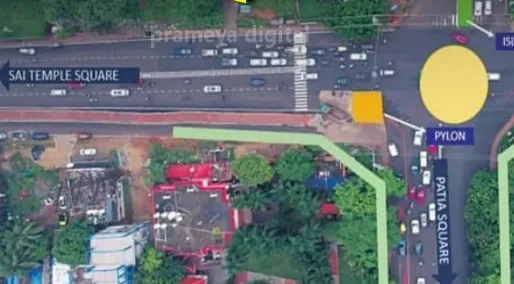
A roundabout is proposed at the centre of Infocity Square.
The road from Patia towards Sai Mandir Square will be widened, while a portion of the CITC boundary wall will reportedly be demolished to create additional road space.
The redevelopment of the 23 junctions is expected to bring significant changes to traffic movement across the capital. However, whether the new designs will actually reduce congestion and improve commuting remains to be seen after the projects are completed.
.webp)