

.webp)
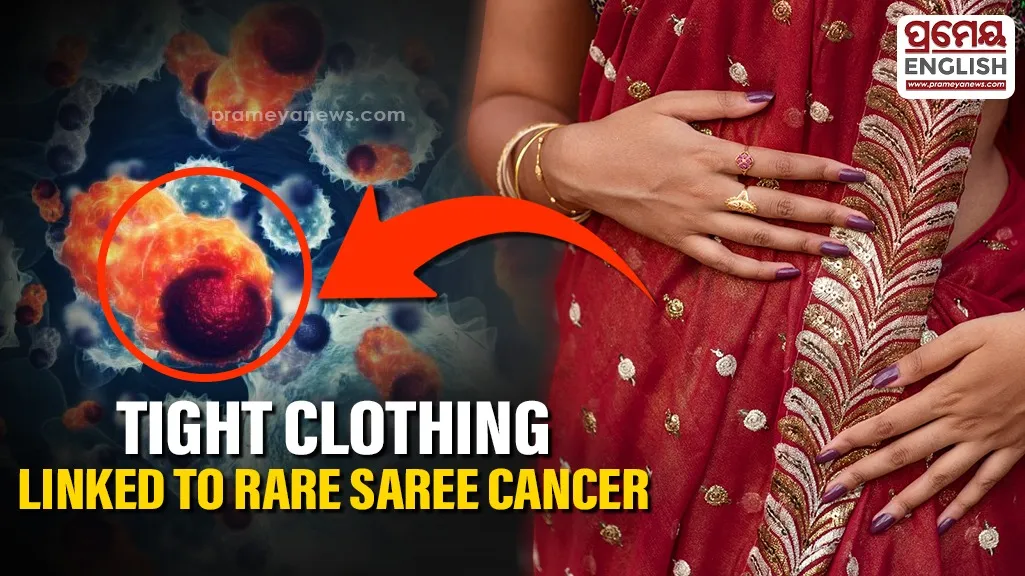
Persistent friction from tight saree waistbands triggers rare cancer.
Health experts are raising alarms over a rare but preventable form of skin cancer caused by the way women tie their traditional garments. Known colloquially as saree cancer, this condition manifests as Squamous Cell Carcinoma. It develops due to constant, long-term friction and pressure exerted by the tight drawstrings of petticoats. This mechanical irritation prevents the skin from healing, eventually leading to malignant changes in the tissue at the waistline.
Understanding the Friction Mechanism
Constant rubbing of the waistband against the skin causes chronic inflammation. Over several decades, this repetitive trauma leads to non-healing ulcers or scaly patches. While many ignore these marks as simple pigmentation or rashes from heat, they can evolve into dermatological malignancies. The risk is particularly high in regions with hot and humid climates where sweat adds to the abrasive nature of the fabric against the skin.
Cultural Context and Prevention
Traditional Indian attire has remained largely unchanged for centuries, but the recent medical documentation of this condition provides essential information gain for women’s health. In rural and urban Odisha, where sarees are the primary daily wear, understanding this risk is vital. To prevent this, women should consider using broader waistbands or switching to elastic grips that distribute pressure more evenly.
Recognizing Early Warning Signs
Early detection remains the most effective tool for recovery. Persistent itching, skin peeling, or a change in the color of the skin around the waist should not be neglected. Keeping the area dry and ensuring the petticoat is not tied in the exact same spot every day can significantly reduce the chances of developing this rare malignancy.
.webp)