.webp)

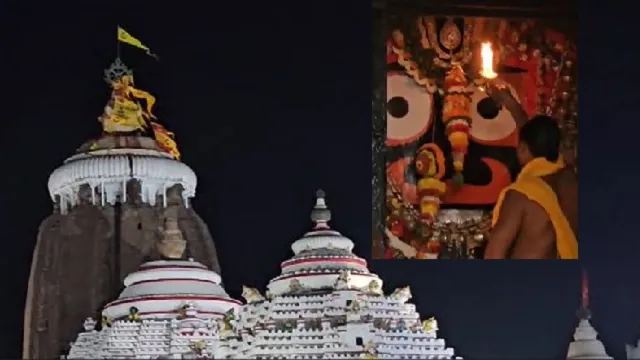
Why does Lord Jagannath, unlike any other Hindu deity, reside in Puri without fully formed hands and feet? What is the divine mystery behind His unique Daru Brahma (sacred wooden) form? Is it merely a legend, or does it symbolize a profound spiritual message that has inspired devotees for centuries?
According to Hindu tradition, King Indradyumna, a devoted worshipper of Lord Vishnu, received divine guidance to carve the idols of Lord Jagannath, Lord Balabhadra and Devi Subhadra from a sacred neem log known as Daru Brahma.
It is believed that Lord Vishwakarma, the celestial architect of the gods, appeared in the guise of an elderly carpenter and agreed to carve the idols on one condition—he would work in complete seclusion for 21 days, and no one was to open the workshop door before the stipulated time. If the condition was violated, he would leave the work unfinished.
For several days, sounds of carving emerged from the chamber. However, after some time, complete silence prevailed. Concerned that something might have happened to the carpenter, Queen Gundicha urged King Indradyumna to open the door before the 21-day period had ended.
Unable to resist the queen's concern, the king opened the door. To their astonishment, Vishwakarma had disappeared, leaving behind the idols in an unfinished form—with incomplete hands and feet.
Overwhelmed with remorse, King Indradyumna prayed to Lord Jagannath, seeking forgiveness for breaking the divine condition. According to the legend, the Lord then appeared before the king and declared that the unfinished form was not a mistake but His own divine will.
The Lord is believed to have said that He wished to remain in this unique form so that every devotee, irrespective of caste, creed, physical ability or social status, could see themselves in Him. The incomplete form symbolises that divinity transcends physical perfection and that God's presence is beyond human limitations.
This extraordinary appearance also represents the philosophy that the Supreme Being is infinite and cannot be confined to conventional artistic or physical standards. The absence of fully formed limbs reminds devotees that it is devotion, faith and compassion—not outward appearance—that connect humanity with the Divine.
For millions of devotees, Lord Jagannath's unfinished wooden form is therefore not an incomplete sculpture but a complete expression of divine grace. His Daru Brahma form continues to stand as a timeless symbol of equality, inclusiveness, humility and unconditional love, making Him one of the most unique and universally revered deities in Hindu tradition.
.webp)