

.webp)


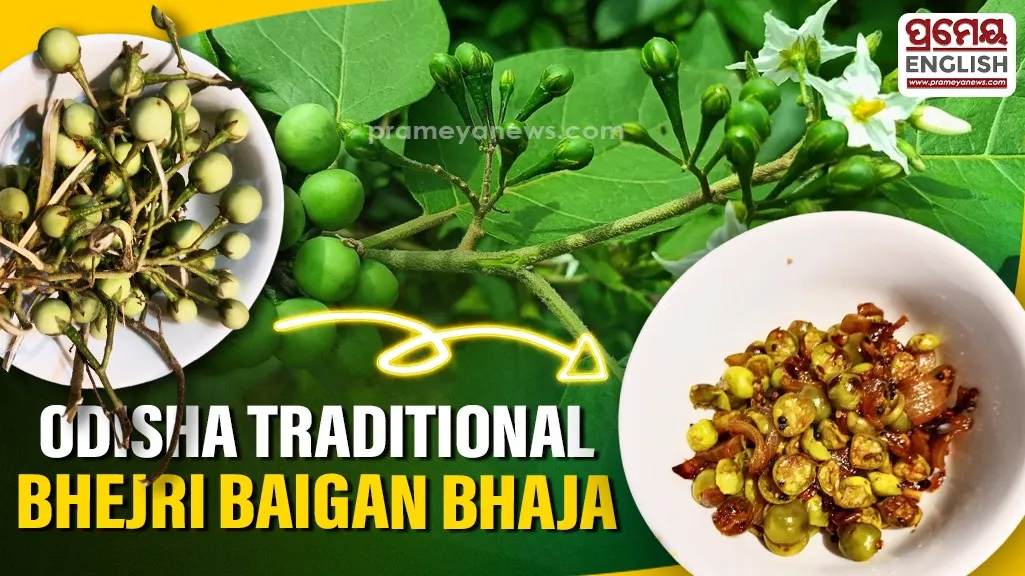
Prepare Wild eggplant into a irresistible Bhejri Baigan Bhaja
Summer kitchens across western and southern Odisha come alive with wild turkey berries. Locals call this hardy fruit bhejri baigan. It offers a unique mildly bitter flavor. Tribal and local rural communities have long relied on indigenous tubers, roots, and wild vegetables to maintain essential dietary diversity. In fact, wild edibles play a crucial role in ensuring nutritional security during lean agricultural seasons across Odisha's rainfed districts. Bhejri baigan thrives perfectly in these hot and humid climates without needing rich soil. People across India cherish this versatile fruit under various unique regional names. Tamil Nadu calls it sundakkai, while Assamese households know it as titbegun. Summer brings a bountiful harvest, even though the plant fruits throughout the year. These small, round fruits grow in clusters. Their skins range from light green to grey-green, often showing faint stripes.
Household backyard gardens in rural Odisha cultivate this hardy crop organically and transform these berries into delicious side dishes. During summer season pakhal feel incomplete without this crunchy bhejri baigan bhaja.
Traditional Bhejri Baigan Bhaja
Preparation requires careful handling to manage the natural bitterness. You must slice the fruits in half and wash them thoroughly. Removing the seeds helps reduce the bitter taste. Cooks prefer harvesting them while light green, as overripe fruits turn intensely tangy. You can also sun-dry the harvest for future use.
Here is how you make this beloved tribal dish. Gather fresh bhejri baigan, mustard oil, cumin, mustard seeds, onions, dry red chilies, green chilies, turmeric, garam masala, and salt. Heat the mustard oil in a heavy pan. Throw in the cumin, mustard seeds, and dry red chilies until they crackle. Toss in the chopped onions and saute until golden brown. Drop the sliced wild eggplant into the pan. Season with salt and turmeric powder. Mix everything well over a low flame. Keep cooking until the eggplant turns a rich brown color. Serve this hot preparation alongside regular rice and dal for a comforting meal.
.webp)