


Boudh, August 14: In a quiet corner of Boudh district, patriotism is not merely remembered once a year-it is worshipped every day.
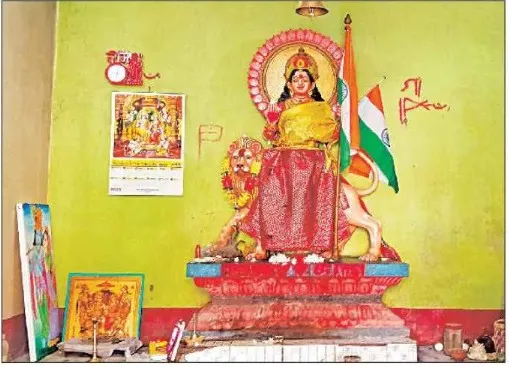
Around 3 km from the Boudh–Subarnapur road, in Banpali village under Gochhapada panchayat, stands a temple unlike most others in Odisha. Here, the presiding deity is not a traditional Hindu god or goddess, but Bharat Mata-Mother India.
The temple is believed to trace its roots to the Quit India Movement of 1942, when the country was in the grip of the freedom struggle. According to local accounts, freedom fighters associated with the village used the place to hold meetings and nurture the spirit of nationalism. It was during this period that Bharat Mata came to be revered as a symbol of the nation's freedom and unity.
More than eight decades later, that legacy continues.
Every morning, devotees gather at the temple for prayers and arti. But the temple takes on a special significance on Independence Day and Republic Day, when the Tricolour is ceremonially hoisted and villagers come together to celebrate the nation.
Patriotic songs fill the air, with Vande Mataram among the songs sung by the villagers. For the people of Banpali, these occasions are more than commemorative events—they are a continuation of a tradition handed down through generations.
The temple has also become an important part of village life. Community meetings, social programmes and religious activities are held on its premises. During Nuakhai, one of western Odisha's most cherished festivals, villagers offer the first harvest to Bharat Mata before beginning their own celebrations with the new rice.
Banpali itself is a close-knit village of around 560 people, with many families belonging to the Meher community and traditionally associated with weaving. The Bharat Mata temple has emerged as a common space that brings the community together beyond caste, occupation and individual differences.
The younger generation, too, has embraced this legacy. A youth organisation associated with Bharat Mata is involved in various social and developmental activities, keeping the spirit of collective responsibility alive.
For Parshuram Meher, who has been serving as the temple priest for around 15 years, the temple is much more than a place of worship. For the villagers, Bharat Mata is their ‘Ishta Devi’—a divine representation of the land they call their mother.
There is also a quiet wish among the villagers: that this unusual piece of history should receive greater recognition. They want better road connectivity and improved facilities around the temple, including development of the premises and a park, so that visitors can discover the story of a village where the idea of the nation itself became an object of devotion.
In Banpali, the freedom struggle may belong to history books, but its memory remains remarkably alive.
Here, the Tricolour is not simply a flag. Bharat Mata is not simply an idol. Together, they represent a legacy of freedom, faith and an enduring love for the nation.