
.webp)


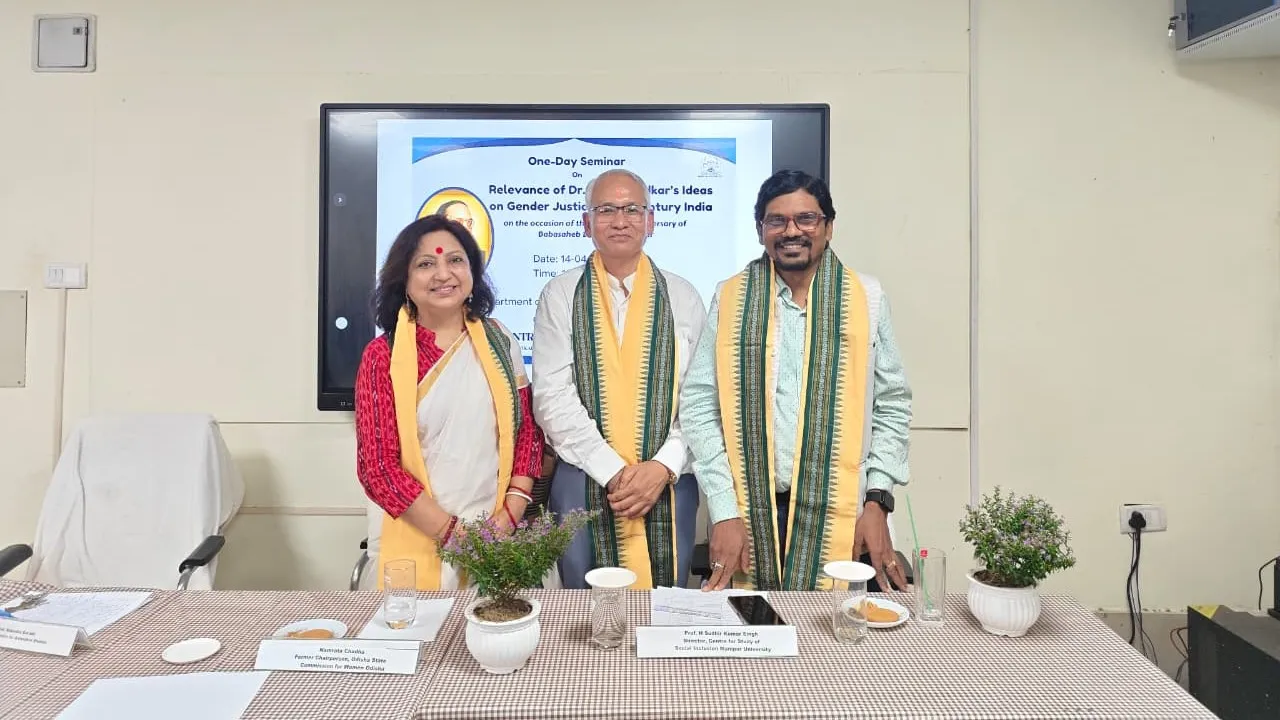
Scholars at Utkal University analyse Ambedkar’s gender justice framework.
Utkal University’s Centre for Ambedkar Studies marked the 135th birth anniversary of the Dalit icon by hosting a national seminar dedicated to his evolving theories on gender equity. Intellectuals gathered at the Department of Sociology in Vani Vihar to dissect the theme "Relevance of Dr. B.R. Ambedkar's Ideas on Gender Justice in 21st Century India."
Bridging Tradition and Digital Diversity
Prof. Rabindra Garada, Director of the Centre, opened the session by categorising human history into three specific "kingdoms": Tradition, Modernity, and the Post-Modern Digital Era. He argued that traditional structures historically relied on the social exclusion of women, citing the Vedic-era restrictions placed on figures like Satyakam and Jabala. In contrast, while modernity imposed rigid regulations, the current digital age allows diversity and identity to merge. Garada emphasised that true justice is irreducible; it naturally carries the weight of liberty, fraternity, and equality. Odisha has long been a fertile ground for Ambedkarite thought, with Utkal University frequently serving as the intellectual epicenter for social reform movements within the state since its inception in 1943.
Structural Transformation and Property Rights
Prof. Sudhir Kumar Singh from Manipur University expanded the dialogue by detailing five pillars of justice necessary for true gender parity. He asserted that economic justice requires equal property rights and the right to work with dignity. Singh further argued for social and political justice through personal choice in relationships and robust representation in governance. According to Singh, Ambedkar’s practical philosophy offers a roadmap for dismantling patriarchal social structures to build a truly egalitarian nation.
Inclusion yeyond Economics
Social and legal advisor Smt. Namrata Chadda delivered a keynote address challenging the audience to view gender justice as a daily practice rather than a theoretical concept. She noted that while macro-level changes have occurred in Indian society, deep-rooted inequalities remain stagnant. Chadda argued that gender inclusion fails if it relies solely on economic metrics; it requires an intrinsic cultural shift in how society values the female position.
Dr. Paramananda Nayak concluded the event with a vote of thanks, supported by a large cohort of research scholars committed to advancing Ambedkar’s vision of annihilating caste and patriarchy simultaneously.

.webp)