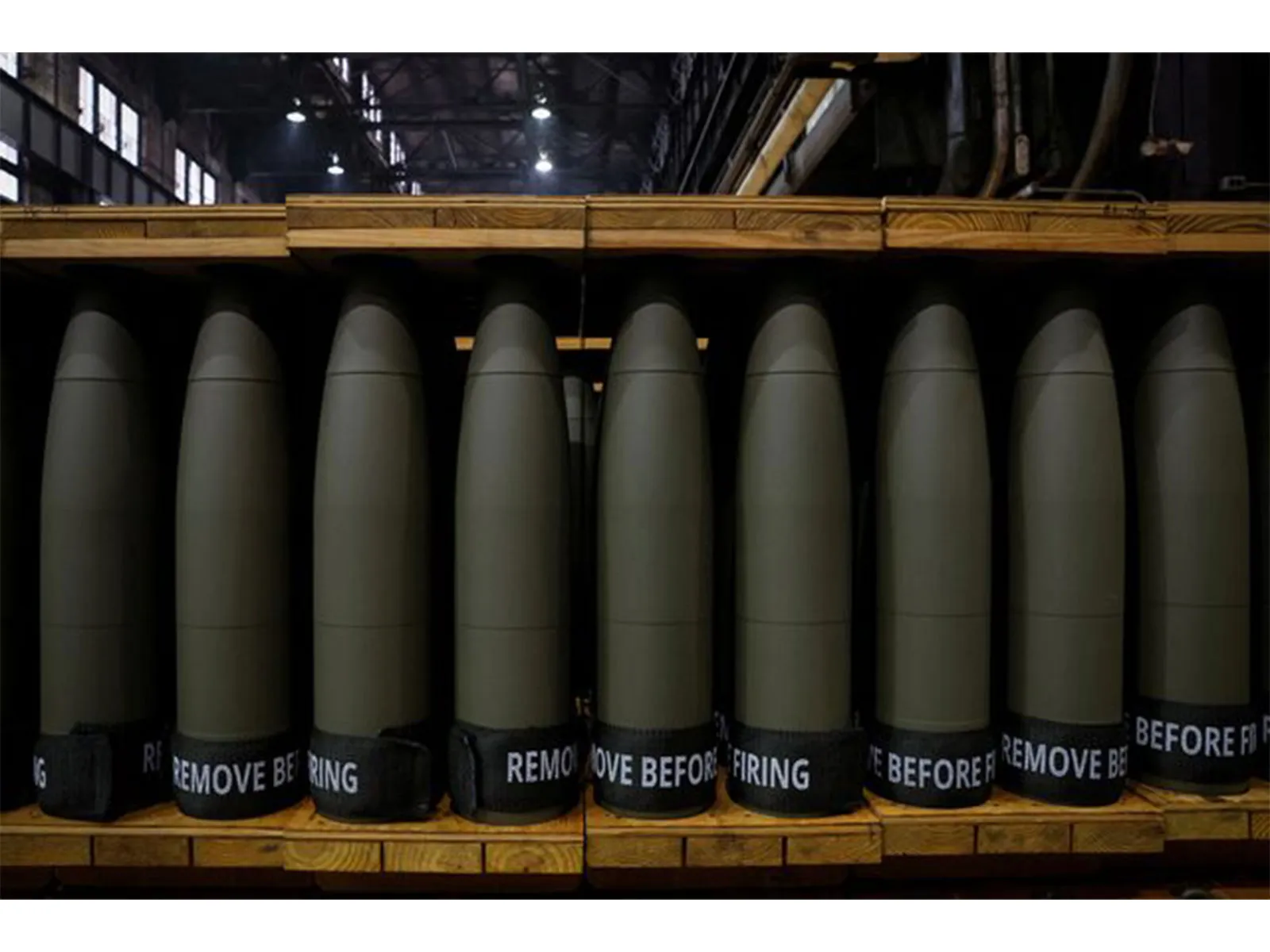
Washington, DC [US], August 9: The US Defence Department has asked American defence contractors to urgently increase weapons production and speed up deliveries amid concerns over a shortage of critical munitions linked to the war with Iran, The Washington Post reported while citing a memo.
Deputy Defence Secretary Steve Feinberg told industry leaders on Wednesday they have up to 21 days to submit plans for "significantly faster, more aggressive delivery schedules and/or increased production for critical capabilities".
"Years-long development timelines are unacceptable," Feinberg said, calling on companies to "dramatically accelerate" output and timelines.
This comes even as a Pentagon official told Al Jazeera on Saturday that US munitions stocks remain adequate.
"We have sufficient munitions for the task at hand. The department has everything it needs today to execute a war," Al Jazeera quoted Jarred Conley, principal deputy director at the Defence Department's Defence Innovation Unit, as saying.
The interceptor shortage was said to be a key issue raised by US President Donald Trump and senior advisers before the administration decided last month to pause further escalation against Iran, Al Jazeera reported.
Meanwhile, Trump on Thursday dismissed as "fake" a report that he confronted Secretary of War Pete Hegseth over depleted US weapons stockpiles during a meeting at Camp David, insisting he has "the utmost confidence" in his Pentagon chief.
While addressing a report published by The Washington Post, Trump stated on Truth Social that he was "extremely happy" with the performance of Hegseth and accused the news outlet of disseminating "false and completely unfounded rumours".
"The Fake News, as usual, is spreading false and completely unfounded rumours. I am extremely happy with the job that Pete Hegseth is doing," Trump wrote.
He lauded the execution of military operations under Hegseth, highlighting the administration's actions in Venezuela and Iran, and noted that both missions had fulfilled their objectives.
Trump further attributed rising military recruitment figures and the removal of diversity, equity and inclusion (DEI) programmes to Hegseth.
Labelling The Washington Post "one of the worst media outlets in the business", Trump claimed that the publication was cautioned prior to release that its story was "completely FALSE" and characterised the coverage as "treasonous".
The Washington Post, citing sources familiar with the development, stated that Trump voiced irritation towards Hegseth during a Cabinet session at Camp David last week regarding alleged deficits in key munitions, particularly long-range missiles and air-defence interceptors, which were reportedly impacting US military strategies in the Iran conflict.
As per the report, Hegseth refuted claims of misleading the president and attributed the lack of a full briefing to Deputy Secretary of War Stephen Feinberg.
The report further asserted that the interaction highlighted Trump's mounting irritation with his Pentagon chief as the ongoing Iran conflict strained US arms reserves.
Both the White House and the Pentagon refuted the claims.
White House Press Secretary Karoline Leavitt stated that the narrative "literally never happened" and reiterated that Trump maintained "the utmost confidence" in Hegseth.
Pentagon spokesman Sean Parnell similarly rejected the assertions, stating that Hegseth had neither misled anyone regarding US ammunition supplies nor held Feinberg responsible for potential deficits.

.webp)

.webp)