
.webp)


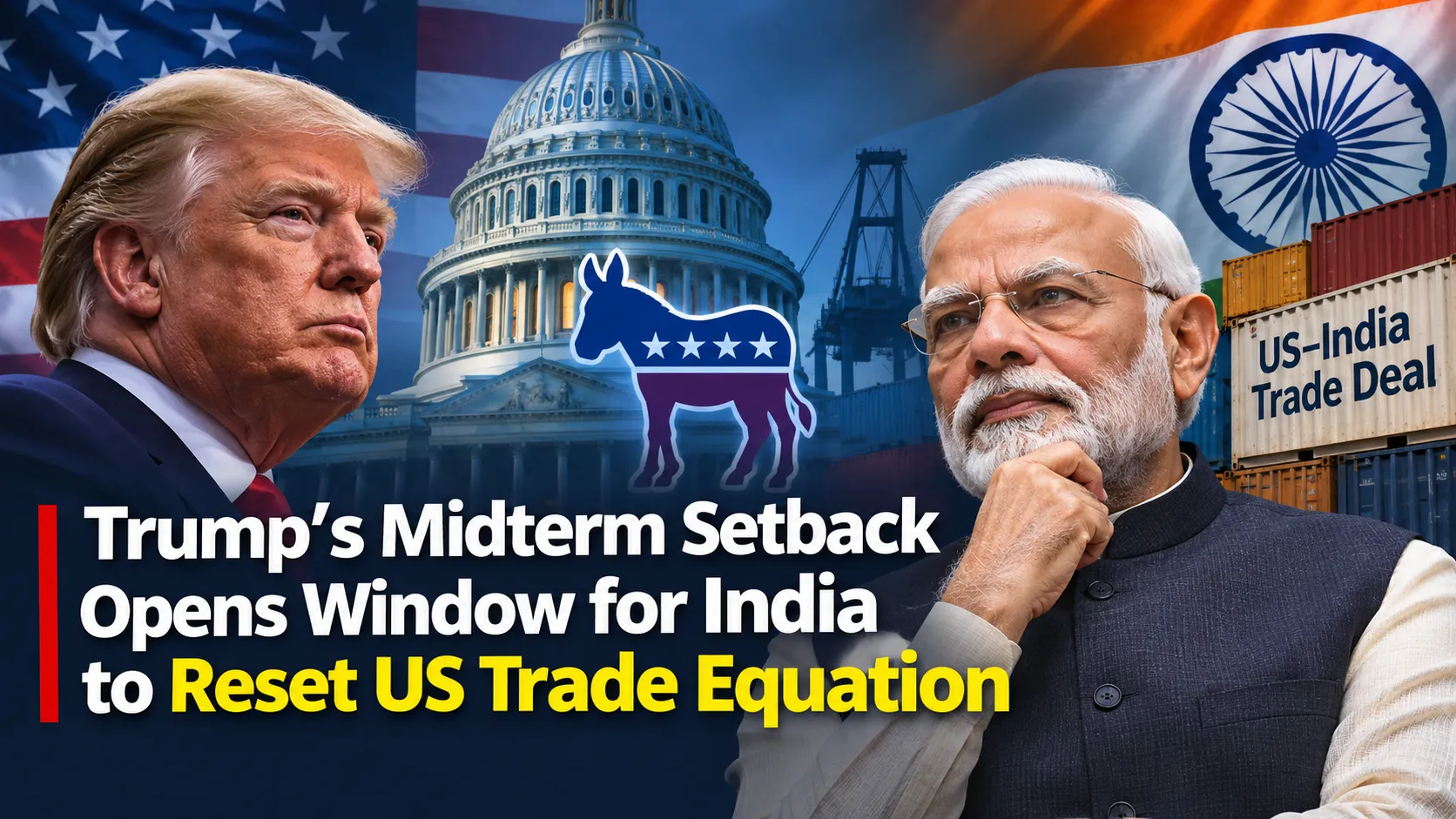
The Democratic Party's sweeping victory in the US midterm elections could give India an opportunity to strengthen its hand in the ongoing trade negotiations with Washington, as President Donald Trump faces mounting political pressure to deliver economic gains before the opposition takes control of Congress in January 2027.
With Democrats securing control of both the House of Representatives and the Senate, Trump could look to fast-track pending trade agreements, including the proposed bilateral trade agreement (BTA) with India, to demonstrate progress on his economic agenda before the new Congress takes office on January 3.
The election setback could make trade agreements an important political deliverable for Trump, particularly amid concerns over inflation, living costs and the economic impact of his tariff policies. A deal with India could offer the administration an opportunity to showcase progress in opening markets and strengthening economic ties.
For New Delhi, the changing political landscape presents an opportunity to push for more favourable terms rather than rush into an agreement. India could seek greater tariff certainty for its exporters, improved market access and safeguards for sensitive sectors such as agriculture and dairy.
Also read: JD Vance and Ted Cruz distance themselves from Donald Trump following midterm poll losses
Finance Minister Nirmala Sitharaman had earlier indicated India's willingness to conclude the agreement, while underlining the limits of further concessions. On October 5, she said negotiations had reached a "plateau" beyond which additional give-and-take would be "very, very difficult". Speaking at an interaction with the Atlantic Council on October 16, she expressed hope that the agreement would be concluded at the earliest in the interest of bilateral and global trade.
However, India's negotiating position also faces uncertainty from Washington's bipartisan approach towards countries importing Russian energy.
The proposed punitive measures against buyers of Russian oil were originally introduced in April 2025 by Republican Senator Lindsey Graham and Democratic Senator Richard Blumenthal under the Sanctioning Russia Act. The legislation sought to empower the US administration to impose secondary tariffs of up to 100% on countries continuing to purchase Russian oil and gas, including India and China.
Trump issued a waiver on October 16, suspending the application of these duties in the national interest, while leaving the administration with the power to reconsider them.
The bipartisan backing for the legislation suggests that pressure over India's Russian energy purchases may extend beyond Trump's Republican administration. Although the waiver offers temporary relief, Washington retains a potential tariff instrument that could complicate trade negotiations.
For India, the opportunity lies in using Trump's desire for an early trade agreement to secure better market access and long-term tariff certainty, while ensuring that its energy security interests are not compromised by the changing political equations in Washington.
.webp)