
.webp)


Engineering Breakthrough at High Altitude
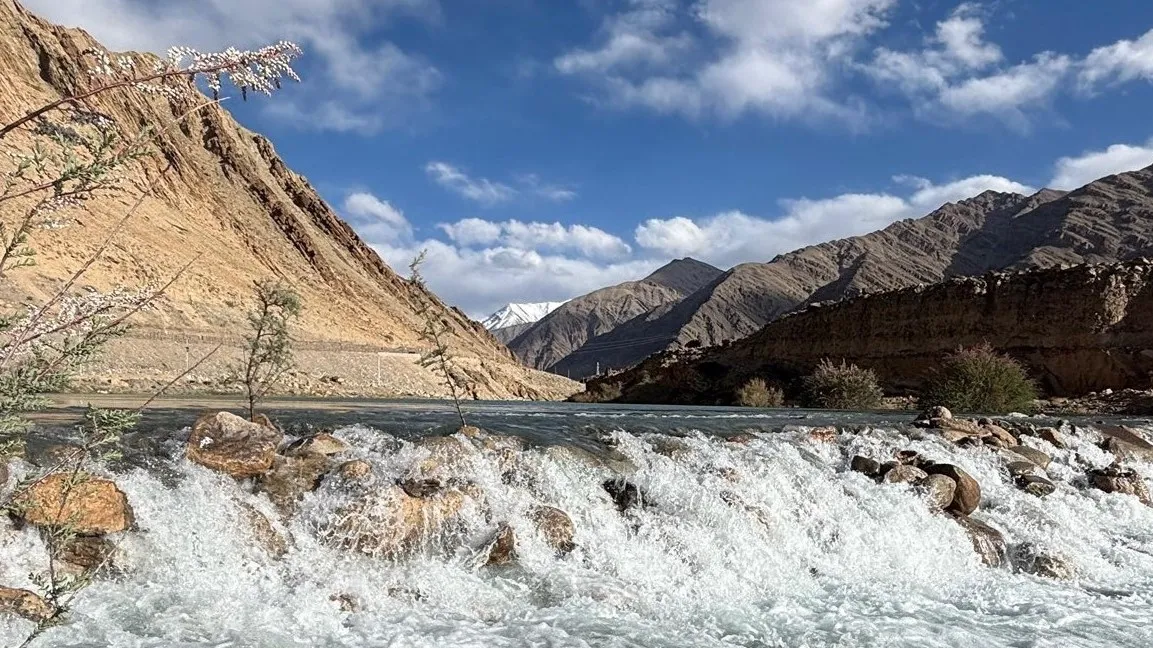
India's inaugural rock check dam now stands functional across the Indus River at an altitude of 11,400 feet to combat recurring seasonal water shortages. Established under the newly launched Sindhu Jal Samriddhi Abhiyan, the structure provides a low-cost, ecological response to the irrigation crisis gripping upstream rural villages. Lieutenant Governor Vinai Kumar Saxena commissioned the project at Upshi in Leh district following a swift seven-day development cycle executed between May 12 and May 18.
Solving the Shallow River Crisis
Traditional concrete barriers alter local river morphology permanently, prompting regional administrators to opt for a semi-permanent, porous design instead. During the spring sowing cycle, water levels dropped significantly, rendering mechanical suction pumps ineffective for shifting water to elevated agricultural terraces. This manual stone arrangement successfully slows down river currents, raising peripheral water levels while allowing necessary downstream discharge. Local authorities assembled approximately 180 metric tonnes of riverbed boulders, varying from 500 kilograms to 10 tonnes, to ensure structural stability without utilizing commercial cement.
Restoring Arid Landscapes
The newly finished structure creates a 500-meter upstream reservoir holding 40 million litres of water, maintaining a depth of ten feet at its center channel. Designed to withstand extreme physical forces, the barrier will withstand shifting seasonal flows as river discharge climbs from 25 cusecs to an estimated 200 cusecs during peak summer thaws. Following this initial operational success, the Irrigation & Flood Control Department has received clear directives to execute three additional experimental rock barriers along critical narrow stretches of the river network.
.webp)