

.webp)


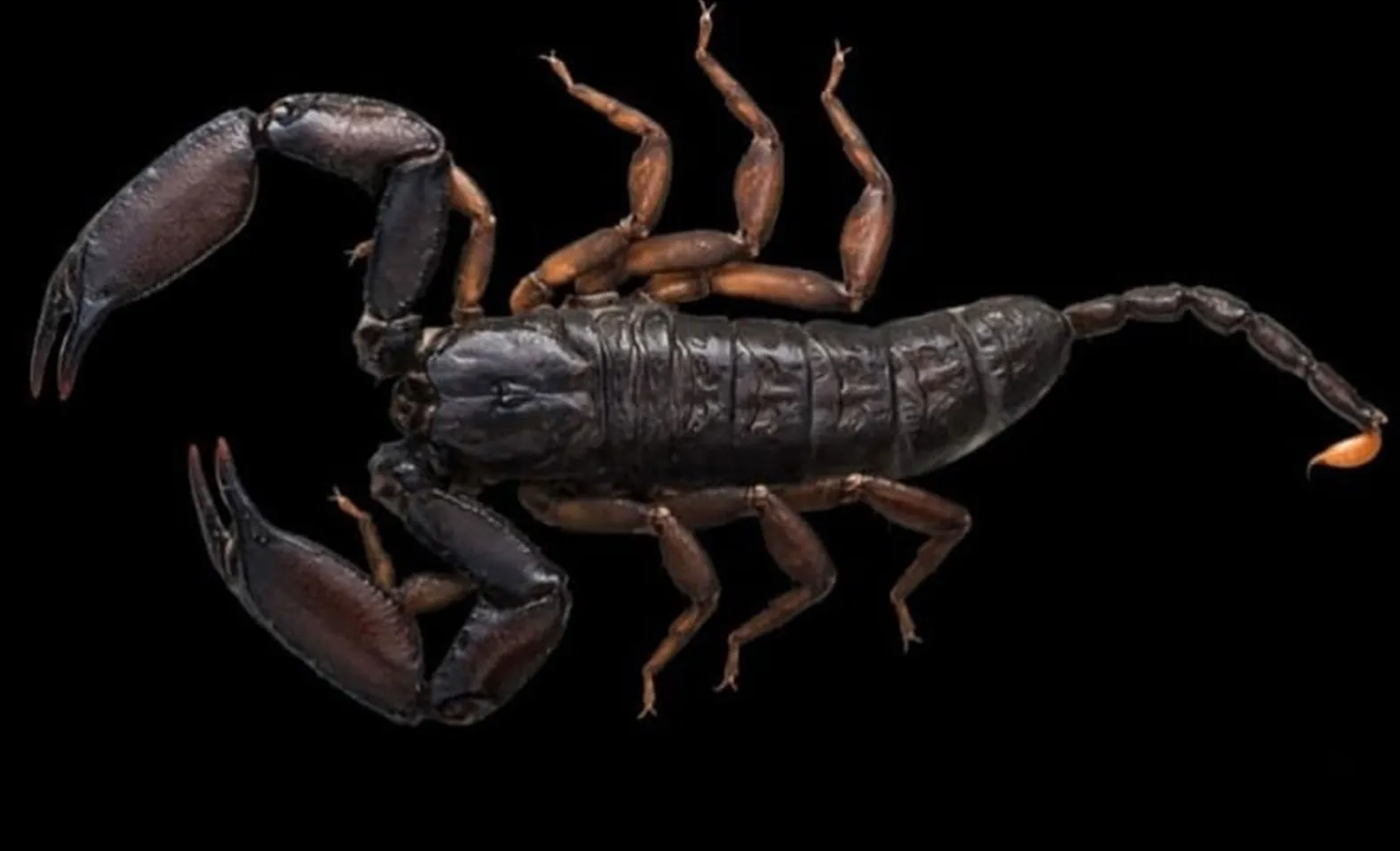
Odisha forest officials record rare blue-shining scorpion species discovery
Wildlife researchers have documented an unrecorded variety of scorpion inside Mayurbhanj district's protected forests, expanding India's biological records. Scientists from Maharashtra-based Thackeray Wildlife Foundation partnered with local tiger reserve management to verify this finding. Experts designated this arachnid as Liocheles similipalensis, directly honoring its native habitat. This development brings the total global count of recognized species within this specific biological group to seven.
Unique physical traits and habitat preferences
Field personnel initially spotted the unusual creature during routine territorial patrols across rocky, moist deciduous zones at an elevation of 1,000 meters. Measuring between 44 and 53 millimeters, this specimen exhibits a dark black exoskeleton accented by a distinct metallic blue sheen. Its defining physical characteristic involves fine setae, or microscopic hair-like structures, concentrated on the lower leg segments. Such specific morphological details clearly separate it from previously cataloged relatives. Samples underwent rigorous evaluation by external specialists to ensure accurate classification.
Collaborative research uncovers rare arachnid
Similipal Field Director Dr. Prakash Chand Gogineni coordinated the initial reporting phase alongside wildlife specialists Saurabh Kininge, Tejas Thackeray, and Akshay Khandekar. Their combined verification marks the first time anyone has documented this particular genus inside state borders. These predatory arthropods maintain crucial ecological balance by naturally controlling local insect populations across the forest floor.
Also read: Odisha welcomes a new English Daily: 'Prameya Times' debuts on Diwali
Future genetic testing and conservation goals
Further genetic testing remains necessary to determine whether this organism exists beyond its currently known geographical boundaries. Research teams plan to conduct extensive DNA analysis and targeted regional surveys to map its exact distribution across similar topographies. Documenting smaller organisms proves vital for overall ecosystem conservation, extending protection strategies beyond high-profile megafauna like tiger and elephant populations. Similipal National Park functions as a globally recognized biosphere reserve, traditionally celebrated for its sprawling landscapes and rich deciduous vegetation. Identifying specialized creatures like Liocheles similipalensis reinforces the hidden ecological value residing within these protected zones, demanding continued scientific monitoring.
.webp)