


Sambalpur, Oct 4: Western Odisha witnessed Pua Jiuntia, a traditional festival centred on maternal love, devotion and prayers for the long life and well-being of children.
As part of the observance, mothers undertake a 24-hour nirjala fast, abstaining from both food and water. The fast is dedicated to Lord Dutibahana, with prayers for the health, protection and prosperity of their children.
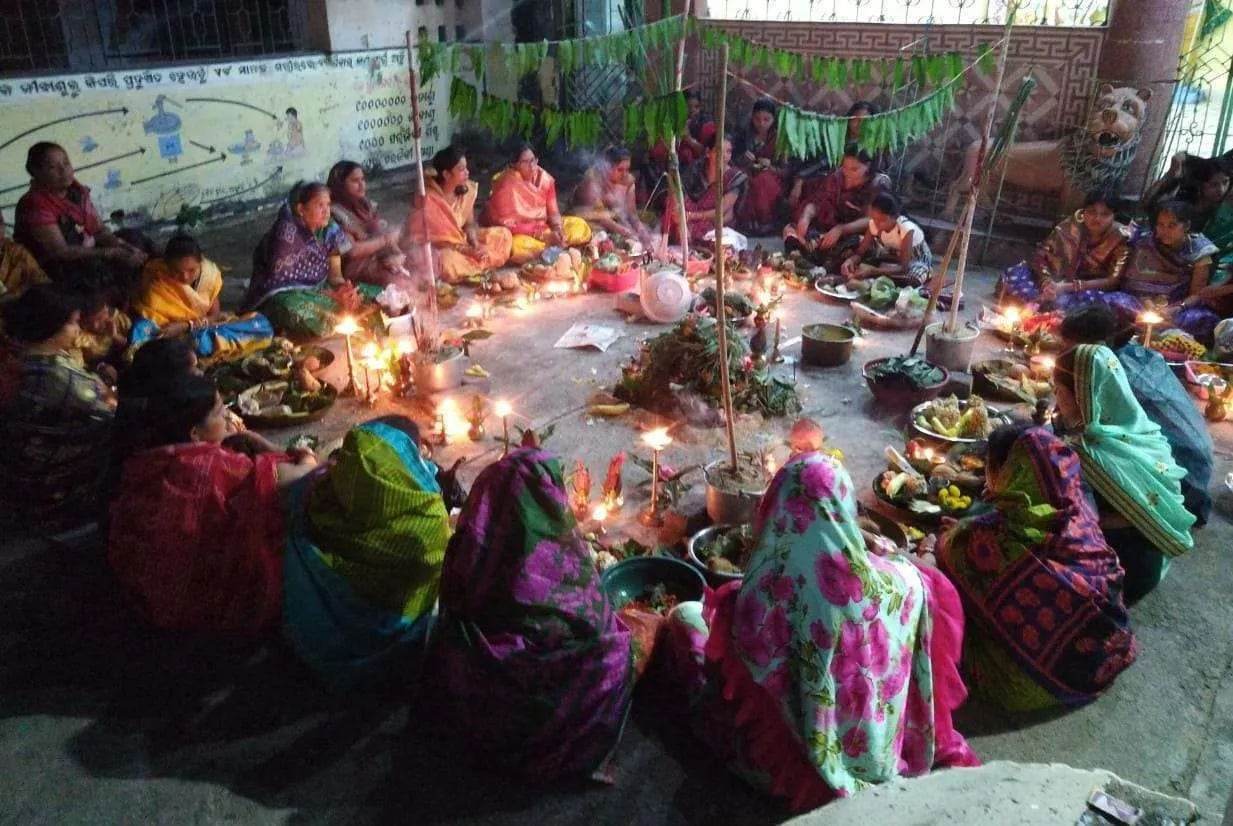
The main rituals are held in the evening at village courtyards, community halls and temples. Women dressed in traditional attire gather for collective puja and prepare ritual bundles containing 108 strands of tender Duba grass and 108 grains of Akshata rice for each child.
The bundles are sanctified during the puja amid traditional songs and prayers. At dawn the next day, mothers bless their children by gently touching their heads with the sacred Duba and Akshata. They also offer new clothes as a symbol of blessings and a fresh beginning.
Also Read: Dwitiya Osha: A major traditional festival of Odisha
21-vegetable ghanta marks the end of the fast
A traditional mixed-vegetable curry is an important part of the post-fast meal. Known as Dutiya Ghanta, the dish is traditionally prepared with 21 varieties of locally available vegetables.
After completing the rituals and serving the traditional food, mothers break their 24-hour fast.
Pua Jiuntia beyond the traditional son-centric ritual
Also Read: Dwitiya Ghanta: Know significance & recipe to make 'Ghanta'
Although the festival is traditionally associated with prayers for sons, its observance has evolved with changing times. Mothers now extend the same prayers and blessings to daughters, seeking their health, prosperity and well-being.
In many families, young girls and daughters also observe the fast to pray for the long life and good health of their fathers.
Despite changing lifestyles, Pua Jiuntia continues to remain an important cultural tradition in Western Odisha, reflecting the enduring bond between parents and children.