

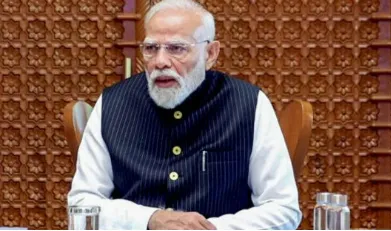
New Delhi, March 26: Prime Minister Narendra Modi will hold a video conference with Chief Ministers (CMs) tomorrow evening to discuss the ongoing West Asia conflict and review state-level preparedness. The meeting aims to foster coordinated action and strengthen "Team India" synergy. However, sources have revealed that Chief Ministers of states heading into elections will not be part of the discussions. This includes Kerala's Pinarayi Vijayan, West Bengal's Mamata Banerjee, Tamil Nadu's MK Stalin, Assam's Himanta Biswa Sarma, and Puducherry's N Rangasamy.
The meeting comes amidst growing concerns over fuel shortages across the country, fueled by rumors. Jammu and Kashmir Chief Minister Omar Abdullah has urged citizens not to panic in light of long queues at petrol stations in Jammu. Abdullah addressed the reports, stating, "My earnest request is that you stop camping outside petrol pumps; otherwise, I will shut all the petrol pumps for the next few days." He clarified that the government has assured there is no shortage of petrol, diesel, or LPG, and that misinformation circulating on social media is to blame for the public's anxiety.
Abdullah further reassured the public that no restrictions on fuel use have been imposed, urging people to avoid panic buying. He confirmed his participation in tomorrow's online meeting with PM Modi, reiterating that the supply situation remains stable.
On Wednesday, Defence Minister Rajnath Singh chaired an all-party meeting in New Delhi regarding the West Asia crisis. During the session, government officials briefed the attendees on India's response to the crisis and its impact. Cabinet Committee on Security members, including Rajnath Singh, Home Minister Amit Shah, External Affairs Minister S. Jaishankar, and Finance Minister Nirmala Sitharaman, represented the government. Health Minister J.P. Nadda and Parliamentary Affairs Minister Kiren Rijiju were also present.
A detailed briefing by Foreign Secretary Vikram Misri, alongside remarks from External Affairs Minister Jaishankar and Petroleum Minister Hardeep Singh Puri, highlighted that India's energy security remains stable. The country has adequate stocks of crude oil, LPG, and fertilizers, with several shipments having already arrived and more expected soon, thanks to India's strong refining capacity. The government also emphasized its proactive diplomatic outreach, noting that New Delhi is in constant communication with all parties involved to ensure uninterrupted supply lines, calling it a "diplomatic success."
On the safety front, authorities reassured the public that there is no cause for panic, with Indian embassies assisting citizens in affected regions. Evacuation plans remain in place, with the safety of Indians abroad being the government's top priority.
Earlier, Prime Minister Modi, addressing the Rajya Sabha, assured the nation that India has sufficient crude oil reserves and robust systems for continuous supply. He underscored the expansion of strategic petroleum reserves and the diversification of energy imports from 27 to 41 countries in the past decade, reducing the country's dependence on any single source. Despite disruptions in global trade routes, especially through the Strait of Hormuz, the Centre has reassured the nation of India's preparedness to handle any economic or logistical challenges. Tomorrow's meeting is expected to further streamline coordination between the Centre and states to manage the ongoing crisis effectively.