

.webp)
Boudh, August 15: For centuries, the former Boudh princely state remained under the rule of kings and chiefs, and its contribution to India’s freedom struggle is often overlooked. But deep within the hills and forests of Boudh lies a historic site that tells a very different story.
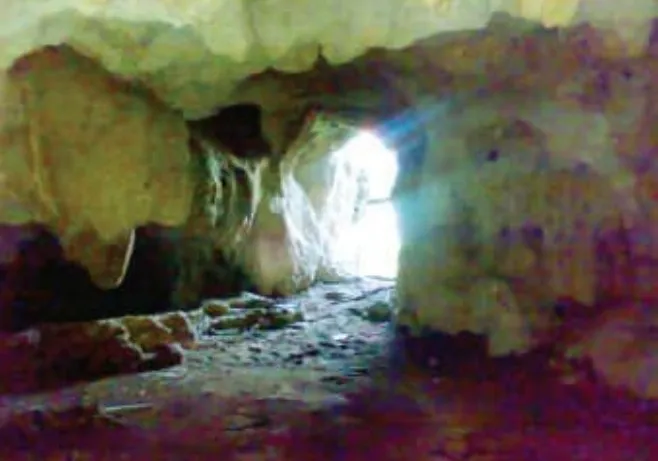
Padam Cave, located in the Ambajhari panchayat area of Boudh Sadar block, is believed to have served as a strategic hideout and planning centre during the Kandha rebellion against British rule. Today, however, the historic site remains largely neglected and difficult to access.
A Cave That Once Became a Centre of Resistance
Padam Cave was originally developed during the era of princely rule as a strategic location to defend the kingdom against enemies. Situated in a remote and forested area, the cave reportedly served as a secret refuge for rulers and a post where soldiers could be stationed to check threats from neighbouring territories.
During the British period, however, the cave took on a very different role.
As the Kandha rebellion spread from the Ghumusar region into Kandhamal and eventually Boudh, the cave became associated with resistance against British authority. Local Kandha fighters reportedly used the area to plan their movements and launch guerrilla operations.
The Kandha Rebellion Reached Boudh
The resistance was linked to the broader movement led by Chakara Bisoi, whose rebellion challenged British control in southern Odisha.
Local Kandha leaders, including Naika Kandha and Dimina Kandha, are remembered for mobilising members of the community in the Boudh region.
The difficult terrain gave the rebels a strategic advantage. From hidden positions in the hills and forests, they were able to carry out guerrilla attacks, forcing British forces to struggle to maintain control.
Historical researcher Satyanarayan Pani has noted that Kandha resistance against the British remained active for decades, particularly between 1836 and 1856. During this period, rebel leaders reportedly used places such as Padam Cave as safe shelters.
A Secret Refuge in the Hills
Far away from major settlements, Padam Cave offered natural protection. The surrounding mountains and dense forests made it difficult for outsiders to reach.
According to local historical accounts, rebel leaders would hide here to escape British forces. The location provided both secrecy and a strategic vantage point over the surrounding region.
But after Chakara Bisoi disappeared, the Kandha movement gradually weakened, and much of Boudh’s contribution to the resistance faded from public memory.
Padam Cave became one of the silent witnesses to that forgotten history.
Why Has This History Remained Unknown?
Despite its connection with resistance against British rule, Padam Cave has not received the attention given to many other historical sites associated with India’s freedom movement.
Even historians have pointed out that references to Padam Cave in mainstream accounts of the Indian freedom struggle remain limited.
Today, the site stands in a neglected condition, leaving an important chapter of Boudh’s history largely unexplored.
A 10-Km Trek Just to Reach the Site
Reaching Padam village itself is an adventure.
Visitors reportedly have to walk nearly 10 kilometres through hilly and forested terrain, as there is no proper road connecting the area.
The difficult journey has contributed to the site's isolation and limited public awareness.
Yet, those very forests and hills that make the journey difficult are also what give Padam Cave its historical character.
Could Padam Cave Become a Heritage Tourism Destination?
Locals and historians believe that proper conservation and development could transform Padam Cave into an important heritage and eco-tourism destination.
The site offers a rare combination of history and natural beauty. Preserving the cave, improving road connectivity and creating basic visitor facilities could help younger generations learn about the lesser-known history of Boudh's resistance movements.
It could also provide an opportunity to promote the region's natural landscape alongside its historical heritage.
Boudh's in-charge District Tourism Officer Prabhakar Kanhar has said that necessary steps would be considered after a visit to the area.
A Forgotten Chapter Waiting to Be Rediscovered
Padam Cave is more than a natural formation hidden in the hills of Boudh.
It is a reminder that the struggle against British rule did not happen only in famous cities and well-documented battlefields. Resistance also emerged from remote forests, tribal communities and forgotten corners of princely Odisha.
Today, the cave may lie in neglect, but its history still survives in local memory.
.webp)