
.webp)


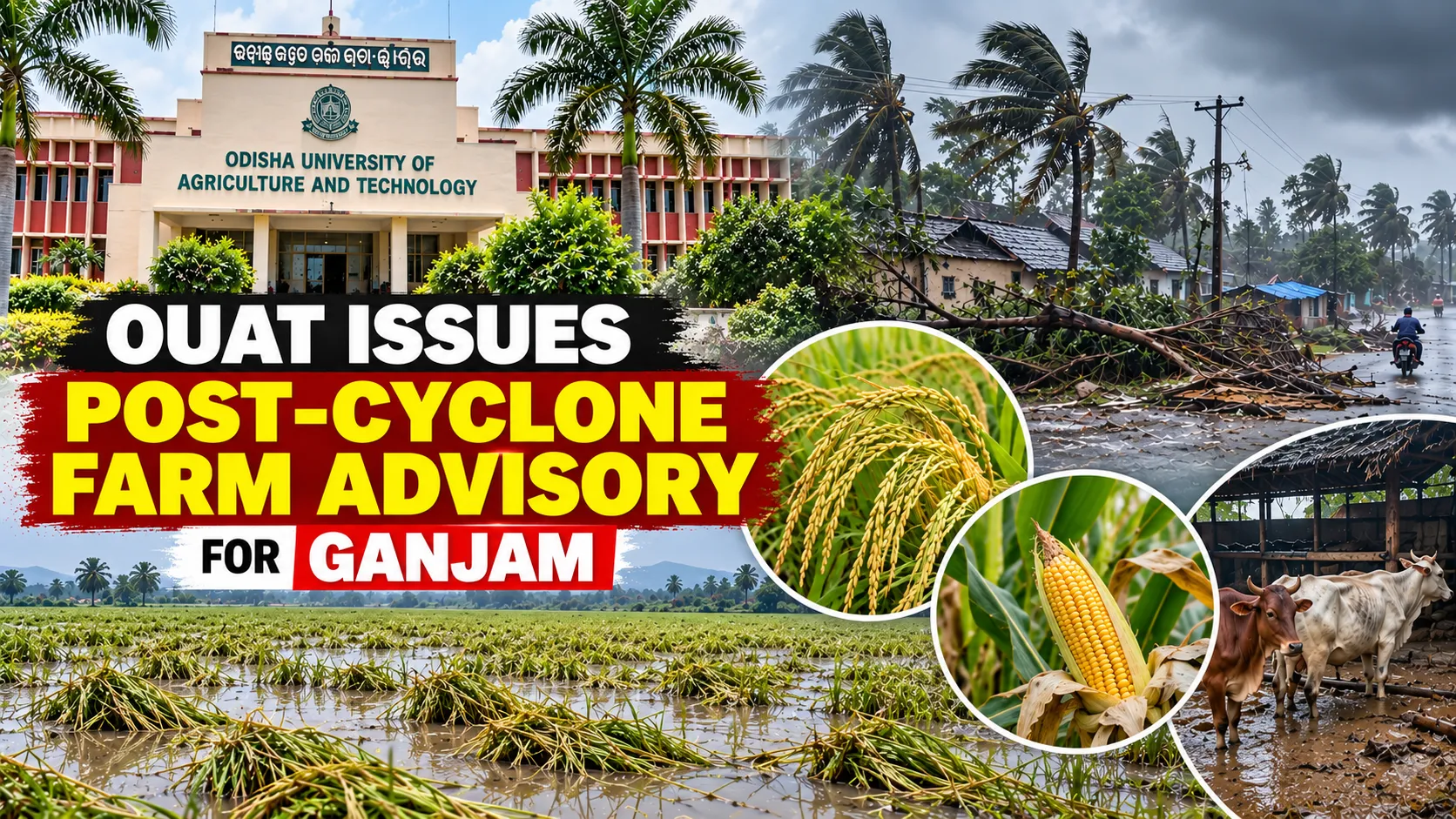
Bhubaneswar, Oct 30: The Odisha University of Agriculture and Technology (OUAT) on Friday issued a post-cyclone agrometeorological advisory for Ganjam district in the aftermath of Cyclone Arnab, warning farmers of possible crop damage, pest infestations and diseases due to waterlogging and excess moisture. The advisory outlines precautionary measures to protect crops, livestock, poultry and fisheries as the district recovers from the storm.
For paddy farmers, OUAT has advised keeping drainage channels open to remove excess water and temporarily suspending the application of fertilisers and pesticides until rainwater recedes.
The university has warned of possible swarming caterpillar attacks on paddy crops after the rains, along with blast, sheath rot and sheath blight diseases due to changing moisture conditions.
Maize crops are also vulnerable to waterlogging and lodging due to heavy rainfall. OUAT has recommended earthing up the crops, ensuring proper drainage and taking measures against possible Fall Army Worm attacks after the rains recede.
Also read: Odisha flood: Pujari directs restoration of roads, electricity services on war footing
Farmers growing cowpea and beans have been advised to harvest mature produce and sell it in the market. They have also been warned of possible pod borer attacks. Banana growers have been asked to harvest ripened fruits, store them safely and support plants with bamboo sticks to prevent them from falling.
For vegetable growers, OUAT has recommended harvesting mature produce, keeping drainage channels open and avoiding fertiliser and pesticide applications until excess water recedes. Nurseries growing tomato, chilli and brinjal should be protected with plastic sheets, while tomato plants should be supported with stakes.
The advisory also recommends arranging dry fodder for livestock and maintaining cleanliness in animal sheds. Poultry shelters should be kept dry and well-ventilated. Farmers have been cautioned against allowing animals to graze in flooded areas or drink contaminated water. Fish farmers have been advised to inspect and repair damaged pond embankments, sluice gates and water channels. Screens and nets should also be installed or repaired to prevent cultivated fish from escaping.
.webp)