


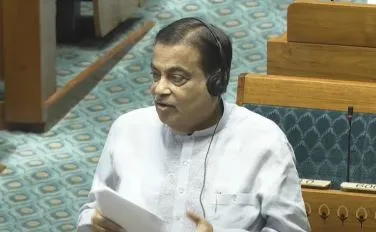
New Delhi, July 29: Union Road Transport and Highways Minister Nitin Gadkari on Wednesday said only some Bharat Stage (BS)-III vehicles manufactured before 2016 may require replacement of certain rubber parts and gaskets to run on E20 petrol, while no engine modifications are necessary.
In a written reply in the Rajya Sabha, Gadkari said studies conducted by the Indian Oil Corporation (IOC), the Indian Institute of Petroleum (IIP), Dehradun, the Society of Indian Automobile Manufacturers (SIAM), and the Automotive Research Association of India (ARAI) found that both cars and two-wheelers are compatible with E20 fuel without engine alterations.
According to the studies, even older vehicles showed no significant decline in performance or abnormal wear and tear after prolonged use of petrol blended with 20 per cent ethanol. No issues were observed in drivability, startability, or compatibility with metal and plastic components.
However, Gadkari noted that tests on BS-III vehicles introduced from April 1, 2005, and manufactured before 2016 indicated that some rubber components and gaskets might need replacement. He added that these minor changes can be carried out during routine vehicle servicing.
Responding to concerns over fuel efficiency, the minister said mileage depends on several factors and cannot be linked solely to the use of E20 fuel. He cited assessments by automobile manufacturers and vehicle-testing agencies supporting this view.
Gadkari further informed the House that an Inter-Ministerial Committee set up by NITI Aayog in December 2020 had comprehensively examined vehicle compatibility, mileage and efficiency related to ethanol-blended petrol. Studies from IOC, ARAI and SIAM backed its findings.
The committee's report, Roadmap for Ethanol Blending in India 2020–25, released in June 2021 before the rollout of E20 fuel, evaluated aspects such as material compatibility, engine calibration, fuel systems, drivability, durability, emissions and fuel efficiency after consultations with automobile manufacturers, oil marketing companies and agricultural experts.
The minister said the Ethanol Blended Petrol (EBP) Programme has been implemented through a phased, scientifically validated and consultative approach. He also noted that ethanol-blended fuel has been in use worldwide for more than a century, including in countries such as Brazil.