


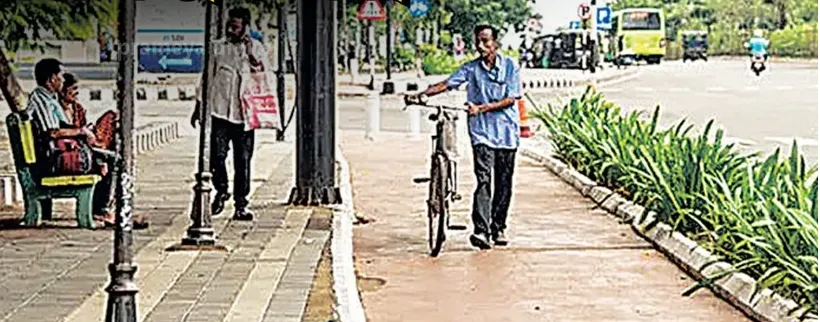
Bhubaneswar, Sept 26: Pedestrians in Odisha could soon get greater protection on city roads as well as national and state highways, with the state government proposing a dedicated set of safety rules aimed at reducing pedestrian accidents.
The Commerce and Transport Department on Thursday published the draft ‘Odisha Pedestrian Safety Rules, 2026’, proposing dedicated pedestrian tracks, removal of footpath encroachments, repairs of broken slabs and open drains, and stricter traffic regulations around vulnerable areas.
735 Pedestrians Died in Odisha in 2024
According to police data cited in the draft, 735 pedestrians died in road accidents in Odisha in 2024, including 143 women.
The Ministry of Road Transport and Highways’ Road Accidents in India report recorded 800 pedestrian deaths in Odisha in 2022. The state also reported 20 pedestrian deaths in bicycle-related collisions, the highest such figure among states that year, according to the cited data.
The government has proposed the new rules in view of the risks faced by pedestrians on roads across the state.
25 kmph Speed Limit Near Schools
The draft places special emphasis on controlling vehicle speeds in school zones.
In school zones located within urban and rural settlements, the maximum speed would be 25 kmph. Where schools are located along highways or major rural roads, the speed limit would be restricted to 40 kmph.
School and hospital zones would also be required to have footpaths, pedestrian crossings, warning signs, speed-limit signs and traffic-calming measures.
No Encroachment on Footpaths
The draft proposes strict measures to keep pedestrian infrastructure free from obstruction.
Construction debris, advertisements, cables and other materials would not be permitted on footpaths, zebra crossings or cycle tracks. Driving or parking vehicles on footpaths, except at designated locations, would also be prohibited.
Police and local authorities would be empowered to remove vehicles and other obstructions found blocking pedestrian pathways.
Dedicated footpaths would be developed along major urban roads, high-pedestrian corridors and highways passing through residential areas. The footpaths would have to be level, durable and slip-resistant.
Even during road construction and repair work, agencies would have to maintain a temporary pedestrian passage of at least 1.5 metres in width.
Pedestrians to Get Priority at Zebra Crossings
The proposed rules give pedestrians priority at zebra crossings.
Where traffic signals are absent or non-functional, vehicles would have to give way to pedestrians and cyclists crossing through marked zebra crossings.
If one vehicle stops to allow pedestrians to cross, another vehicle would not be permitted to overtake it.
While overtaking bicycles or other non-motorised vehicles, motorists would generally be required to maintain a minimum distance of 1.5 metres.
Action Over Unsafe Road Design
The draft also seeks accountability for deficiencies in road design, construction and maintenance.
If an investigation establishes that a pedestrian's death, disability or serious injury resulted from such deficiencies, action may be taken against the concerned road-owning agency, contractor or consultant under applicable laws and contractual provisions.
Possible measures include withholding payments, directing corrective work, recovering compensation, suspending work or cancelling contracts.
Public Can Submit Suggestions Within 30 Days
The state government has invited objections and suggestions on the draft within 30 days before finalising the rules.
After considering the feedback received, the government will finalise the regulations.
Once notified, new roads are proposed to be made pedestrian-friendly in phases within three years, with priority given to accident-prone locations involving pedestrians.
Citizens would also be able to report footpath obstructions through online or mobile-based complaint mechanisms, with the draft proposing resolution of such complaints within 30 days.
Traffic police, the Transport Department and urban local bodies would conduct regular inspections and take action against violations.