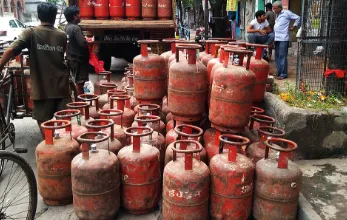
New Delhi, June 23: The Middle East remains the most reliable source of LPG supplies for India, and the restoration of flows through the Strait of Hormuz is being closely watched by the country's energy sector following recent disruptions, Pulkit Agarwal, Head of India Content at S&P Global Energy, told ANI on Tuesday.
"Middle East continues to remain and today still is one of the most reliable and the only source of LPG which can supply the kind of LPG that India needs," Agarwal told ANI in an exclusive interview on the sidelines of the S&P Global Energy New Delhi Energy Briefing.
He also added that India sought to increase LPG purchases from alternative markets, including West Africa and the United States, during the disruption. However, these sources could not fully compensate for reduced Middle Eastern supplies.
"India tried to maximise where it can buy LPG from. It can be West Africa, it can be the US, which is the world's largest producer of LPG. Not exactly the kind that India needs, but to some extent India did rely quite heavily on the US to fill in LPG demand," he said.
Agarwal noted that physical limitations restricted the volume of LPG India could source from alternative markets.
"There was a physical constraint on how much India can buy from the US in the world," he said.
He said LPG imports into India have declined noticeably in recent months and that the energy sector is closely monitoring the return of supplies through the Strait of Hormuz.
"As we know, the imports of LPG in the country have fallen off quite noticeably in the past few months," Agarwal said.
He added that a return to normal LPG traffic could help ease supply pressures.
"If LPG traffic returns to normalcy, we could see the downstream impact of that constraint, which had kicked in over the past few months, starting to ease slightly," he said.
On LNG, Agarwal said India has greater flexibility because the fuel can be sourced from multiple regions, though higher prices during the disruption affected demand.
"LNG is a homogeneous commodity. You can buy LNG from other places in the world. You need to pay up for it, but the molecule availability is there," he said.
According to Agarwal, landed LNG prices in India remained above USD 16-17 per mmBtu for most of the crisis period, resulting in price-led demand destruction.
"The prices of LNG went up. The landed price of LNG into India remained above 16-17 dollars per mmBtu for most of this crisis, which means there was a lot of price-led demand destruction," he said.
He added that demand could recover if prices fall to around USD 11-12 per mmBtu, a level at which LNG becomes more competitive for discretionary consumers.
Reflecting on the disruption, Agarwal said the episode highlighted India's dependence on Middle Eastern energy supplies and could influence future decisions on sourcing and trading energy commodities.
"The market is looking forward to how people buy and sell oil and other energy commodities and how that evolves out of this crisis," he said.


.webp)


.webp)