


Rourkela, May 22: Researchers from National Institute of Technology Rourkela (NIT Rourkela)’s Civil Engineering department have developed and patented a unique biological system for treating wastewater generated by the dairy industry. By using aquatic plants, earthworms, microbial activity, and a hydroponic filtration system in an integrated setup, the multi-layered process reduces organic pollution and prevents the accumulation of organic matter.
In the production process of dairy products such as cheese, paneer, and yogurt, the Indian dairy industry produces billions of liters of wastewater every day. This wastewater is rich in fats, proteins, and carbohydrates, and has high Chemical Oxygen Demand (COD). This COD is a measure of the amount of organic matter in water. High COD levels reduce the dissolved oxygen needed to sustain aquatic life when released into water bodies.
Conventional treatment methods, such as membrane filtration, do not directly address this challenge and clog frequently.
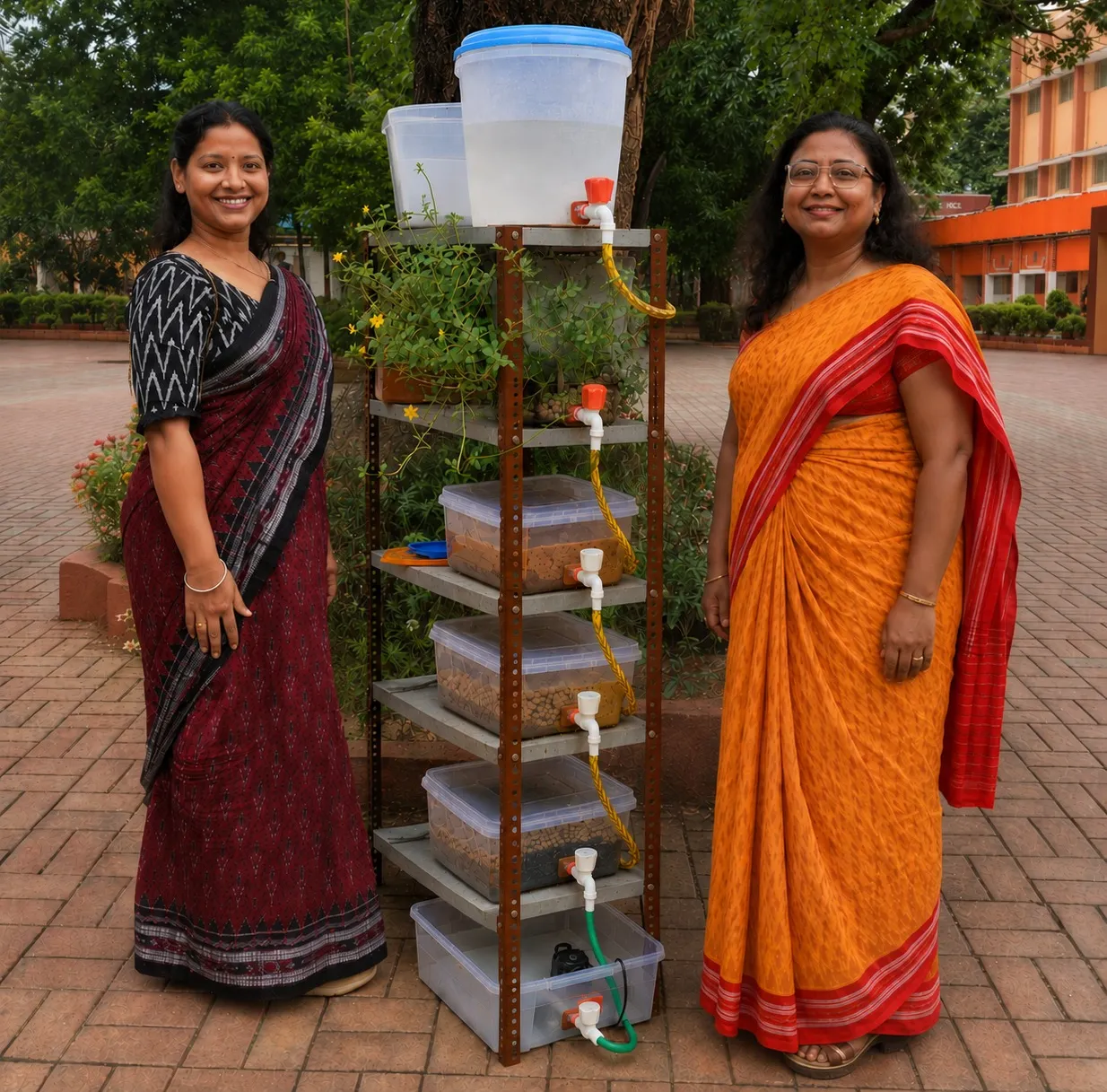
To address this challenge, Prof. KakoliKarar Paul, Professor, Department of Civil Engineering, NIT Rourkela, along with her research graduate (Batch 2025), Dr. Pragyan Das, developed the multi-layered system in which each layer performs a specific purification function while contributing to the overall stability of the process.
The research team has secured a patent titled, ‘Method and System for Treating Dairy Wastewater’ for the developed system (Patent number: 583949; Application number: 202431032506).
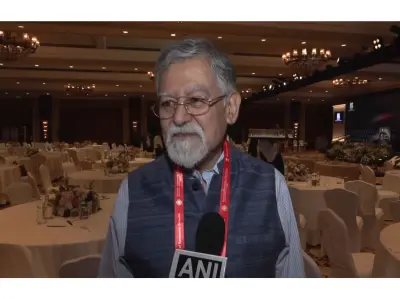
Speaking about the developed system, Prof. KakoliKarar Paul, Professor, Dept. of Civil Engineering, NIT Rourkela, said, “In a lab scale setup, the developed system costs about Rs. 10,000 and is capable of treating 30 liters of dairy wastewater per day which can be further increased as per requirement.”
How does the developed system work?
1st Layer - The wastewater treatment process starts in a worm-active reactor layer containing earthworms and aquatic plants (macrophytes). The earthworms break down organic waste into smaller particles and increase oxygen levels in the wastewater. This increase in oxygen levels enables the growth of microbes that break down pollutants. Additionally, the aquatic plants provide a dense root system that helps prevent blockages and offers a surface for these microbes to grow.
2nd Layer - The purified water then passes through a layer of sand that filters suspended solids through physical means.
3rd Layer - In the third layer, fly ash pellets adsorb pollutants and reduce phosphorus compounds in the wastewater.
4th Layer - The water then flows through a gravel bed where residual organic contaminants are removed by aerobic microbes.
5th Layer – In this stage, the treated water is pumped into a hydroponic (soil-free plant) treatment chamber in which the plants’ roots remain in the water and pump oxygen into the surrounding environment. This oxygen-rich environment encourages the growth of beneficial microbes that form biofilms around the roots and further break down pollutants. This process also helps improve the quality of the treated water.
Highlighting the real-world application and impact of the developed system Dr. PragyanDas, Research Graduate, (Batch 2025)said, “Through this system, we have developed an affordable wastewater treatment solution which can be easily used in regions where access to large-scale treatment infrastructure is either unavailable or limited. With our natural treatment approach, the treated wastewater can be directly reused in agricultural purposes, thus reducing environmental impact and resource-efficient waste management practices.”
In lab tests, conducted using real dairy wastewater, the research team found the treated water to be suitable for irrigation as it retains useful phosphate nutrients.
Additionally, the aquatic plants used in the treatment system can also be used as cattle feed or processed for biogas and biodiesel production, providing resource recovery in addition to wastewater treatment.
As the next step, the research team plans to work on improving treatment speed and optimizing reactor design for large-scale deployment of the developed system. The team is also looking for potential industry collaboration to bring the developed technology from lab to real-world applications.
While conventional methods have worked on these technologies individually, the combination of vermi-filtration, macrophyte-assisted treatment, and hydroponic purification in a sustainable continuous system has enabled the NIT Rourkela research team to achieve improved pollutant removal efficiency and address the clogging issues faced during the wastewater treatment process.