
.webp)

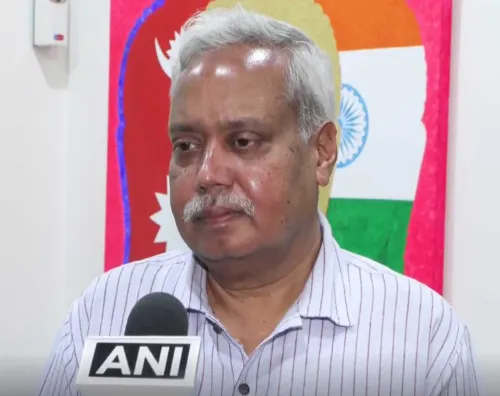
Kathmandu, September 3: Indian Ambassador to Nepal Naveen Srivastava on Thursday clarified that mortal remains recovered after the recent flash floods in Nepal have been temporarily interred to facilitate DNA identification and are not being subjected to mass burial.
Srivastava said the remains, many of which are in an advanced state of decomposition, will be exhumed and handed over to families once DNA matches are established with relatives.
He said the Nepali authorities took this step with public health concerns in mind. Nepal Police has also published photographs of recovered bodies and remains on its website. At the same time, the Indian Embassy has circulated the information through press releases to help families identify missing relatives.
The ambassador said the Indian mission would facilitate communication between families and Nepali authorities once a deceased person is identified so that the remains can be returned to India.
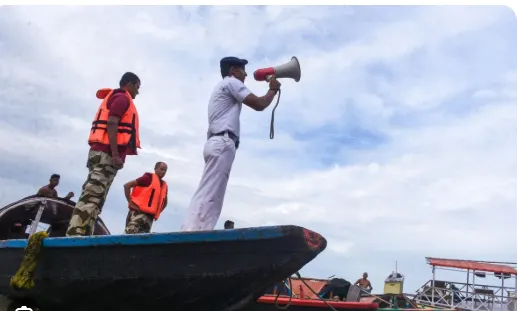
On the rescue of Indian nationals, Srivastava said 166 Indians have so far been rescued with the assistance of the Nepali Army. Those rescued include a 21-member Tamil Nadu group travelling for the Kailash Mansarovar Yatra, more than 80 employees of Andritz working on hydropower projects, and other Indians living in the affected areas.
He said the Indian mission began coordinating with Nepalese authorities soon after the floods struck on August 26 to trace Indians who were missing or stranded in the affected region.
Regarding mortal remains that may have been swept downstream into Indian territory, Srivastava said Indian authorities would follow a similar procedure, preserving the remains and collecting DNA samples for subsequent identification.
The ambassador said Nepal was currently focused on search, rescue and relief operations and would later move towards reconstruction and rehabilitation. He added that India, as Nepal’s close neighbour and partner, would be ready to assist if requested.
The clarification came as Nepal’s flash-flood death toll rose to 1,252, while around 4,216 people remained missing or out of contact, according to the National Disaster Risk Reduction and Management Authority (NDRRMA) update issued till noon on Thursday.
The disaster has so far seen around 11,993 people rescued, while 5,135 injured persons have received medical treatment. Of these, 301 were treated at hospitals, while the Nepali Army and Armed Police Force treated 3,206 and 1,628 people, respectively.
The missing or out-of-contact list includes around 900 people associated with hydroelectric projects, along with approximately 583 foreign nationals and 164 Nepalis accompanying foreign tourists.
.webp)