

.webp)


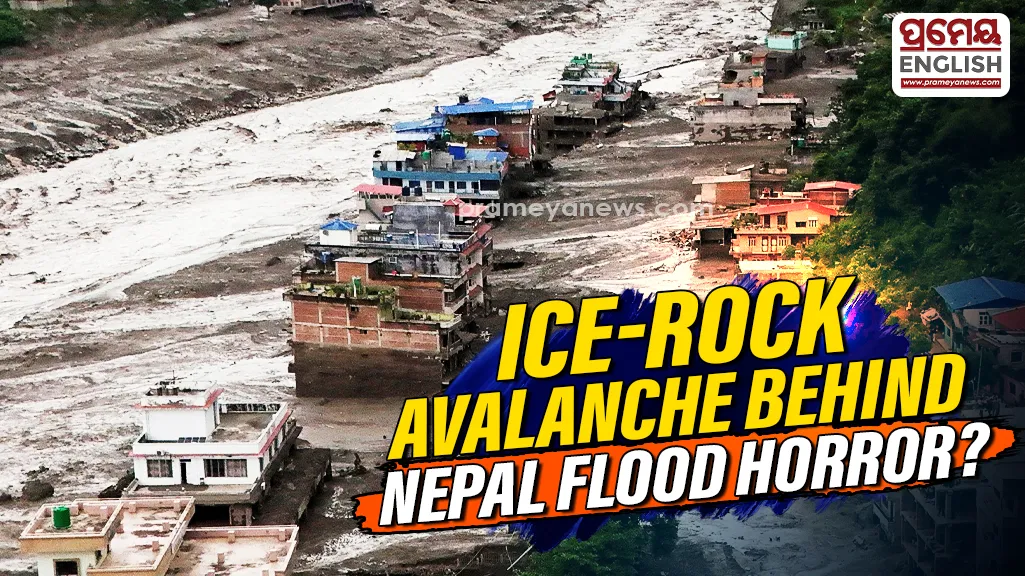
Ice-rock avalanche in Tibet suspected of triggering catastrophic Nepal floods
Devastating flash floods ripped through Nepal's Rasuwa district on Wednesday morning, sending dangerous torrents of water and boulders down the Bhote Koshi and Trishuli rivers. Preliminary investigations suggest a sudden high-altitude ice-rock avalanche collapsed into the Lende Khola tributary near the Tibet border, triggering the catastrophic downstream surge.
Experts from the International Centre for Integrated Mountain Development (ICIMOD) are currently analyzing video footage and seismic records to confirm the exact cause. Rising temperatures across the Hindu Kush Himalayas have made high-altitude glacial terrain increasingly unstable in recent decades, transforming historically frozen peaks into high-risk flood zones.
Unprecedented River Surges
Floodwaters raced downstream with terrifying speed and intensity. Within just 30 minutes, water levels spiked by nine metres on the Trishuli river at Galchhi and seven metres at Malekhu. These populated areas sit nearly 80 kilometres away from Kathmandu, highlighting the extreme reach of the sudden surge. The violent influx of ice, rock, and sediment completely overwhelmed the natural flow of both river systems. Early seismic readings picked up unusual signals right before the disaster, though scientists have not yet confirmed a direct link between these tremors and the suspected avalanche.
Looming Threat of Secondary Hazards
Danger persists for vulnerable communities living downstream. Debris from the initial avalanche has created a precarious natural dam, blocking a narrow section of the river along the Nepal-China border. This temporary blockage poses a severe secondary risk. If the impounded water suddenly breaks through, a second, potentially worse flood will strike the already battered region.
Authorities have issued immediate evacuation orders for Jilong port due to the imminent threat. Qianggong Zhang, Head of Climate and Environmental Risks at ICIMOD, noted that the same areas devastated by flooding last year are now facing renewed destruction. Rescue teams continue working with heavy machinery to access submerged homes across affected districts.
Photo Courtesy: UNICEF / USA
.webp)