
.webp)


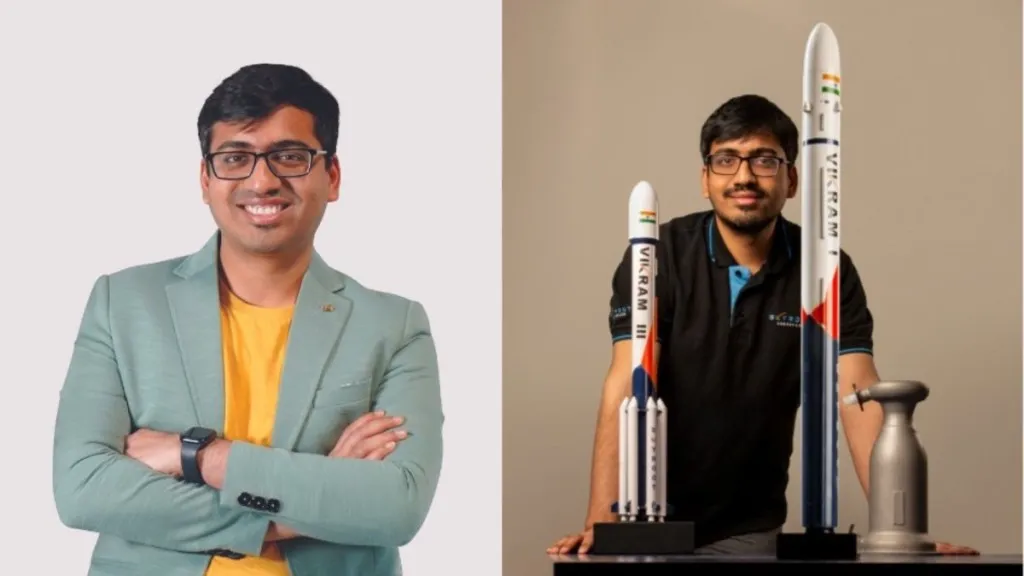
Skyroot Aerospace successfully launched India's first private space rocket
Skyroot Aerospace has successfully launched Vikram-I, marking an extraordinary milestone for India's private space industry. Pawan Kumar Chandana, co-founder of the Hyderabad-based startup, led this historic effort to send a privately built rocket into space. Prime Minister Narendra Modi praised the achievement, noting that the founders have planted new roots to inspire future generations of engineers.
From Low Marks To Rocket Science
Scoring just 51 marks in mathematics during his early school days did not predict a future in aerospace engineering for Chandana. Mathematics and science initially posed serious challenges for the young student. He pushed through these obstacles using pure curiosity and a deep fascination with complex machines. His perseverance paid off when he cleared the entrance exam for the Indian Institute of Technology (IIT), Kharagpur, on his very first attempt.
Instead of chasing high-paying software jobs after graduation, Chandana joined the Indian Space Research Organisation (ISRO). He worked extensively on the GSLV Mk III, the heaviest launch vehicle built by India, earning an internal innovation award for his technical contributions. India officially opened its space sector to private enterprise in 2020, ending decades of government monopoly and creating fertile ground for independent aerospace startups. Recognizing this geopolitical and economic shift early on, Chandana left his secure government position to build something entirely new.
Building India's Private Space Sector
Chandana partnered with fellow ISRO engineer Naga Bharath Daka in 2018 to establish Skyroot Aerospace. Early funding proved difficult, but investments from tech leaders like Flipkart co-founder Binny Bansal helped them survive early hurdles. The company steadily hit major benchmarks, including testing the Raman-1 engine and launching the Vikram-S suborbital rocket in late 2022. Today, Skyroot operates India's largest private rocket manufacturing facility and employs roughly 1,000 specialists.
Entrepreneurship gave Chandana the freedom to create jobs and build essential infrastructure for the country. His transition from a struggling mathematics student to a leading aerospace pioneer proves that early academic hurdles do not dictate future success. He continues to push boundaries, proving that private enterprise can thrive in the demanding field of deep-tech engineering.
.webp)