



Supreme Court cautions against forcing new languages on high schoolers
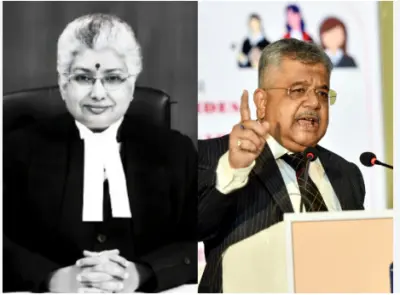
Supreme Court justices have strongly criticised the introduction of new languages for students entering their ninth grade. Justice BV Nagarathna noted that forcing a fresh subject at this critical stage puts unnecessary pressure on children preparing for crucial board exams. She advised introducing these subjects much earlier, preferably by the sixth grade, to allow gradual learning.
These remarks occurred during a hearing regarding Tamil Nadu resisting the establishment of Jawahar Navodaya Vidyalayas. Officials in Tamil Nadu have long opposed these central schools due to their strict adherence to a three-language curriculum. Since the 1968 National Education Policy, India has struggled to balance a uniform language framework across fiercely proud linguistic states. While defending their stance, state counsel argued that making a third language compulsory in high school severely burdens teenagers.
Judicial Push for Early Introduction
Justice Nagarathna quickly clarified that federal policies do not explicitly mandate Hindi. State languages and English remain primary requirements, leaving room for other options like Sanskrit. Reflecting on her own educational background from the 1970s, she highlighted how middle school serves as the ideal starting point for additional linguistic studies. She explained that early exposure gives students enough time to master the basics before academic pressure naturally mounts in high school.
Directing her comments at the Union government, the judge urged education boards like CBSE and ICSE to seriously rethink their current timelines. High school board preparations often begin much earlier than tenth grade, requiring students to maintain intense focus. Adding unfamiliar grammatical structures during this period creates completely avoidable hurdles. Meanwhile, another Supreme Court bench continues to evaluate separate public interest petitions challenging the broader legality of this CBSE framework. State and central governments currently remain in ongoing discussions to resolve this specific dispute.