
.webp)

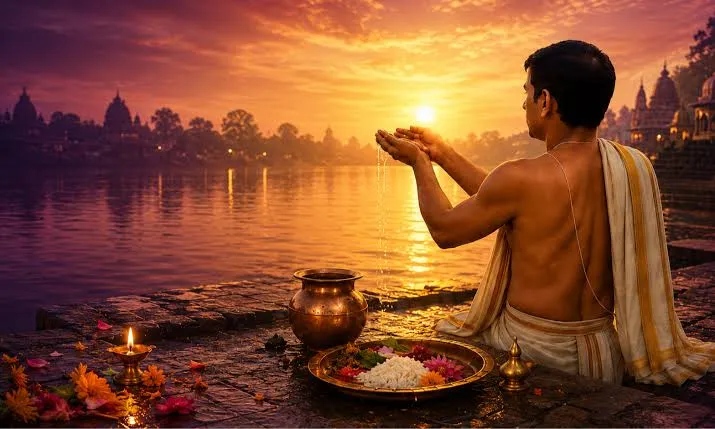
Mahalaya Amavasya, observed on October 10, 2026, marks the conclusion of Pitru Paksha, the sacred fortnight dedicated to remembering and paying homage to deceased ancestors. Also known as Sarva Pitru Amavasya, the day holds special significance for families performing Shraddha and Tarpan rituals for their departed loved ones.
According to Hindu traditions, this is an important day for performing ancestral rites when the exact death-tithi of a family member is unknown or when Shraddha could not be performed on the appropriate day. It is also observed by families remembering ancestors who have no descendants to perform the customary rituals.
Why is Mahalaya Amavasya important?
Mahalaya Amavasya is considered the final and significant day of Pitru Paksha. Devotees offer prayers, food and water to their ancestors, seeking peace for the departed souls and blessings for their families.
The rituals commonly include Shraddha, Tarpan and Pinda Daan. Sesame seeds, water and kusha grass are used in traditional offerings, while food and donations may also be offered as part of the observance.
For many families, the day is an expression of gratitude towards previous generations and a way of preserving ancestral traditions.
The legend of Karna behind Pitru Paksha
A popular legend associated with Pitru Paksha comes from the story of Karna in the Mahabharata.
According to the traditional tale, after Karna reached the afterlife, he was offered gold and jewels instead of food. During his lifetime, he had generously donated wealth but had not made sufficient food offerings to his ancestors.
Realising the significance of the omission, Karna was allowed to return to Earth for 16 days to offer food and water to his ancestors. This period is traditionally linked to Pitru Paksha, which concludes with Mahalaya Amavasya.
The story conveys the importance of food, water, charity and remembrance of ancestors in Hindu tradition.
How is Mahalaya Amavasya observed?
Devotees perform Tarpan by offering water, often mixed with sesame seeds, while remembering their ancestors. Many families also conduct Shraddha ceremonies, offer food and donate essentials to those in need.
The rituals may vary according to family traditions, regional customs and local religious practices.
In Odisha, Bengal and Assam, devotees commonly offer Tarpan at rivers and other water bodies. Many visit riverbanks at dawn to perform the rituals, offering sesame and water in remembrance of their ancestors.
In parts of Maharashtra, families prepare traditional food such as Puran Poli. According to local customs, food may be offered to crows, cows and dogs before meals are served to Brahmins.
In Karnataka, ancestral observances are also followed according to regional traditions and local calendars.
A day of remembrance & gratitude
Mahalaya Amavasya brings together religious observance, family traditions and cultural memories. While rituals differ across regions, the central message remains the same: remembering ancestors with respect and acknowledging their place in the family's history.
As Pitru Paksha concludes on October 10 this year, devotees observe the day through prayers, offerings and acts of charity before turning towards the celebrations and worship of the Goddess during the approaching Durga Puja season.
.webp)