

.webp)


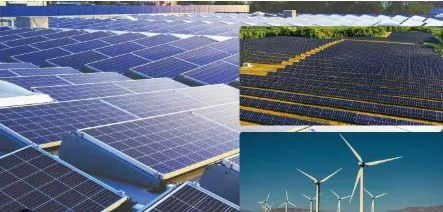
New Delhi, August 9: India has crossed the landmark 300 GW mark in installed non-fossil fuel-based electricity generation capacity, accounting for more than 54 per cent of the country’s total installed power capacity of around 552 GW as of July 31, 2026, the Ministry of New and Renewable Energy (MNRE) said on Sunday.
The milestone marks significant progress in India’s clean energy transition and its climate action commitments, while strengthening the country’s efforts to build a self-reliant energy ecosystem.
Solar power continues to be the primary driver of renewable energy expansion. India’s installed solar capacity has surged to around 165 GW, compared with just 2.8 GW in 2014. Wind power capacity has also grown substantially, rising from 21 GW in 2014 to more than 58 GW currently.
During 2025-26, India added a record 55.29 GW of non-fossil fuel-based electricity generation capacity. Solar power accounted for 44.6 GW of the addition, while wind energy contributed another 6 GW.
With the latest growth, India has achieved around 60 per cent of its target to install 500 GW of non-fossil-fuel-based power capacity by 2030.
The expansion in installed capacity has also translated into a sharp rise in renewable energy generation. Renewable power generation increased from 190.96 billion units (BU) in 2014-15 to 477.79 BU in 2025-26.
Alongside capacity expansion, India has been strengthening its domestic clean energy manufacturing capabilities to reduce dependence on global supply chains. Under the Production Linked Incentive (PLI) scheme, the country has focused on manufacturing high-efficiency solar modules domestically.
The capacity enlisted under the Approved List of Models and Manufacturers (ALMM) for Solar PV Modules has crossed 200 GW, compared with just 2.3 GW in 2014.
The MNRE is also promoting industrial decarbonisation through the National Green Hydrogen Mission, with the objective of positioning India as a global hub for the production, use and export of green hydrogen and its derivatives.
The ministry said the clean energy transition has evolved beyond being merely a climate commitment and has become central to India’s industrial competitiveness, energy independence and long-term economic resilience.
.webp)