


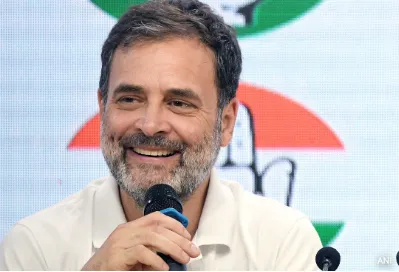
New Delhi, March 21: Rahul Gandhi, the Leader of Opposition in the Lok Sabha and a senior Congress leader, on Saturday criticized the central government over the depreciating Indian rupee and the soaring industrial fuel prices amid growing tensions in West Asia. Gandhi cautioned that these economic trends could lead to higher inflation and stressed that the Prime Minister Narendra Modi-led government is offering "empty rhetoric" instead of a coherent economic plan.
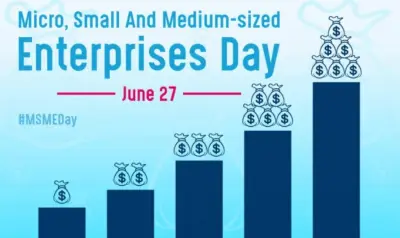
The Congress leader's comments came after the Indian rupee fell below the 93-mark against the US dollar on Friday, reflecting ongoing pressure on the domestic currency. In a post on X (formerly Twitter), Gandhi said, "The rupee's decline against the dollar, approaching the 100-mark, coupled with a steep rise in industrial fuel prices—these aren't mere numbers. They signal the inflation that lies ahead." He further warned that rising production and transportation costs would hurt businesses, especially Micro, Small, and Medium Enterprises (MSMEs), and could lead to Foreign Institutional Investors (FIIs) pulling out of the Indian stock market.
Gandhi also speculated that after the elections in four states and one Union Territory, the central government could raise fuel prices. He added, "The government may label this as 'normal,' but the truth is: Production and transport costs will rise. MSMEs will bear the brunt. Everyday goods will become more expensive, and FII investments will decline even further, putting additional strain on the stock market. Ultimately, this will have a profound impact on every family's finances. And it's only a matter of time before petrol, diesel, and LPG prices are hiked after the elections."
He went on to criticize the government for lacking direction, saying, "The Modi government has no clear strategy—only empty rhetoric. The real question is not what the government is saying, but what is left on your plate."
Earlier on Friday, the rupee hit a historic low, falling to 93 against the US dollar in early trade, as the ongoing conflict in West Asia and persistent foreign capital outflows put continued pressure on the currency. The rupee opened at a record low of 92.89 per dollar and quickly dipped further, signaling deepening economic challenges.
In addition, industrial diesel prices have surged by 25%, rising from Rs 87.67 per litre to Rs 109.59 per litre.
This economic instability comes amid escalating geopolitical tensions, which began on February 28 following the assassination of Iran's Supreme Leader Ayatollah Ali Khamenei. The US and Israel were involved in military strikes that targeted Iran, and in retaliation, Iran attacked US and Israeli assets in multiple Gulf countries and Israel. These actions have disrupted regional waterways and affected global energy markets, contributing to the growing economic uncertainty worldwide.