
.webp)


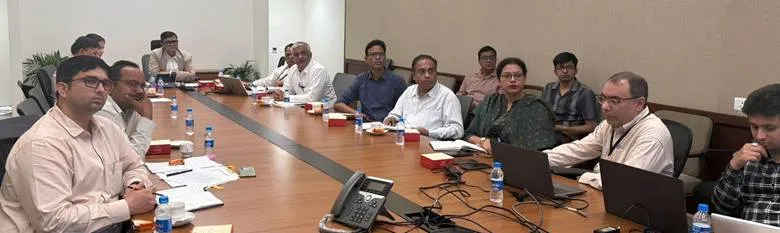
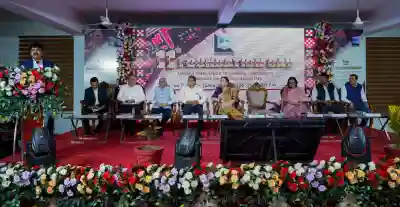
New Delhi, May 16: A high-level meeting was convened under the chairmanship of Sanjay Kumar, Secretary, Department of School Education & Literacy (DoSEL), Ministry of Education, to deliberate upon the issue of out-of-school children, particularly in the 14-18 years age group, and to discuss the implementation strategy for the proposed new NIOS initiative.
The meeting was attended by Smt. Prachi Pandey, Joint Secretary, DoSEL, Prof. Akhilesh Mishra, Chairperson and Col. Shakeel Ahmad, Secretary of the National Institute of Open Schooling (NIOS), senior officials of the Ministry of Education, representatives of State Governments, District Collectors/District Magistrates of identified pilot districts and officials of NIOS and State Education Departments.
Addressing the participants,Sanjay Kumar, Secretary, DoSEL, highlighted the serious concern of school dropouts and stated that, as per available data, out of every 100 children entering Class I, only 62 reach Class XII. He further noted that, according to the latest PLFS estimates, over two crore children in the 14–18 age group are currently out of school.
He observed that economic compulsions, domestic responsibilities, and livelihood-related challenges are among the key factors contributing to children remaining outside the school system. Stressing the need for urgent intervention, Kumar emphasised that every child should have access to education at least up to the secondary and senior secondary levels, along with employable skills aligned with local economic opportunities.
He further stated that while the primary focus should be on reintegrating children into formal schooling, those unable to return to regular schools should be linked to flexible learning pathways, such as the National Institute of Open Schooling (NIOS) and State Open Schools, through Open and Distance Learning (ODL) mechanisms. Kumar also underlined the critical role of District Collectors and district administrations in ensuring effective grassroots implementation and transforming the initiative into a nationwide campaign.
Prachi Pandey, Joint Secretary, DoSEL, stated that the issue of out-of-school children is being addressed in mission mode and highlighted that the proposed initiative would adopt a data-driven approach with a strong focus on last-mile outreach. She underscored the need for convergence among departments at the State, district, and local levels to ensure effective identification, enrollment, and retention of out-of-school children. It was further informed that preparatory activities, including the enrolment of NIOS Facilitators, distribution of starter kits, preliminary surveys, and initial enrolment of children, would be undertaken prior to the formal launch of the initiative.
Prof. Akhilesh Mishra, Chairperson, NIOS, stated that education represents hope, dignity, and opportunity, and observed that the key challenge lies in reaching children who remain disconnected from the education system. He described the initiative as a people’s movement for educational inclusion aimed at reconnecting children and youth with learning opportunities through flexible and inclusive educational pathways.
Col. Shakeel Ahmad, Secretary, NIOS, delivered a detailed presentation on the operational framework of the initiative. The presentation covered the identification and categorisation of out-of-school children, deployment of NIOS Facilitators, app-based mapping and monitoring systems, incentive mechanisms, district-level convergence strategies, and phased implementation plans.
Pilot districts with high concentrations of out-of-school children were identified for the initial implementation of the initiative. These include districts from Odisha, Maharashtra, Chhattisgarh, Bihar, Uttar Pradesh, Gujarat, Karnataka, Madhya Pradesh and Delhi. In the first phase, the new initiative will be implemented across 10 districts in the country. Memoranda of Commitment (MoCs) will be signed with participating States to facilitate its implementation. Based on the learnings from these districts, the programme will subsequently be scaled up across the country.
The participating States and district administrations assured their full cooperation and support for the successful implementation of the initiative. States were also requested to share relevant data and provide suggestions for further strengthening the framework and operational guidelines.
The meeting concluded with a collective resolve to ensure that no child remains outside the education system and that all children are provided with opportunities for education, skill development, and a dignified future.
.webp)