


Bhubaneswar, June 26: The drug menace in Odisha is no longer confined to major urban centres. Once considered a problem largely restricted to Bhubaneswar and Cuttack, the illegal narcotics trade is now steadily spreading into smaller towns and district headquarters, posing a serious threat to public health and law enforcement.
On the occasion of the ‘International Day Against Drug Abuse and Illicit Trafficking, the changing pattern of drug distribution raises a pressing concern: Are Odisha's smaller towns becoming the next target of organised drug networks?
Over the past two years, police records indicate a noticeable shift in narcotics-related activities across the state. Brown sugar, ganja and synthetic drugs have increasingly been seized from districts such as Balasore, Jajpur, Bhadrak, Kendrapara, Puri, Ganjam, Sambalpur, Keonjhar, Angul, Dhenkanal, Koraput and Rayagada. What were once considered relatively safe district towns are now emerging as new hotspots for drug trafficking.
While southern Odisha has traditionally been associated with ganja cultivation and trafficking, law enforcement agencies say the drug landscape is evolving rapidly. Brown sugar and synthetic narcotics are now reaching smaller markets through well-organised supply chains that exploit advances in technology. The widespread use of smartphones, encrypted messaging applications and courier services has enabled traffickers to operate discreetly, extending their networks beyond metropolitan areas.
The growing availability of drugs has become a major concern for educators, who are witnessing changes in student behaviour even in semi-urban areas.
"We are witnessing a worrying change among students. Earlier, substance abuse was largely confined to cities, but now even students in small towns are exposed to drugs through peer pressure, social media and easy availability. Parents and teachers must work together to identify behavioural changes at an early stage. Awareness alone is not enough—we need continuous counselling, life-skills education and open communication to ensure our children stay away from addiction," says Saswat Subhadarshee, a high school teacher from Delanga in Puri district.
Parents are equally alarmed by the changing scenario.
"As parents, we are deeply concerned about the growing drug menace. Earlier, we only worried about bad company, but now drugs seem to be reaching even small towns. We request all parents to spend more time with their children, understand their behaviour and maintain open communication. We also expect schools and the administration to conduct regular awareness programmes and take strict action against drug peddlers. Protecting our children is a responsibility we all share,"says Diptiranjan Baral from Cuttack.
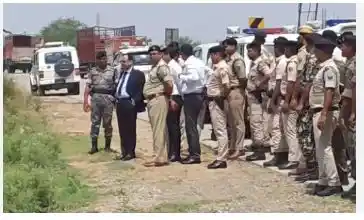
Recent police operations further reflect the changing pattern of narcotics trafficking. Odisha Police and central agencies have intensified crackdowns across the state, leading to multiple seizures of brown sugar and synthetic drugs from district towns. Investigations suggest that traffickers are increasingly targeting locations such as bus stands, railway stations and residential neighbourhoods to attract young consumers and expand their customer base.
However, experts believe the challenge extends beyond law enforcement.
Unlike larger cities, many district headquarters still lack specialised de-addiction centres, trained counsellors and accessible mental health services. Families often have to travel long distances for treatment, while social stigma continues to discourage many from seeking professional help.
Mental health professionals stress that addiction prevention must begin with early intervention, especially among adolescents.
*"Drug addiction is not just a law-and-order issue; it is also a serious mental health concern. Most young people who experiment with drugs do so because of peer pressure, stress, anxiety, loneliness or emotional difficulties. If substance use is identified early, timely counselling and family support can prevent it from developing into addiction. Parents should watch for warning signs such as sudden changes in behaviour, declining academic performance, social withdrawal and mood swings. Seeking professional help early can make a significant difference,"* says psychiatrist Sambit Pradhan from Cuttack.
Experts recommend a multi-pronged strategy to tackle the growing menace. Key measures include establishing de-addiction and counselling centres in every district, strengthening anti-drug awareness programmes in schools and colleges, increasing surveillance around educational institutions and transport hubs, expanding mental health support and skill development initiatives for vulnerable youth, and encouraging greater community participation in prevention and rehabilitation efforts.
As Odisha observes the International Day Against Drug Abuse and Illicit Trafficking, the spread of narcotics into smaller towns serves as a stark reminder that the challenge is no longer confined to urban centres. While police continue to dismantle trafficking networks through sustained enforcement, experts agree that lasting success will depend on a collective response involving families, schools, healthcare professionals, communities and government agencies. Only through awareness, timely intervention, accessible treatment and social support can Odisha safeguard its younger generation from the growing threat of drug addiction.